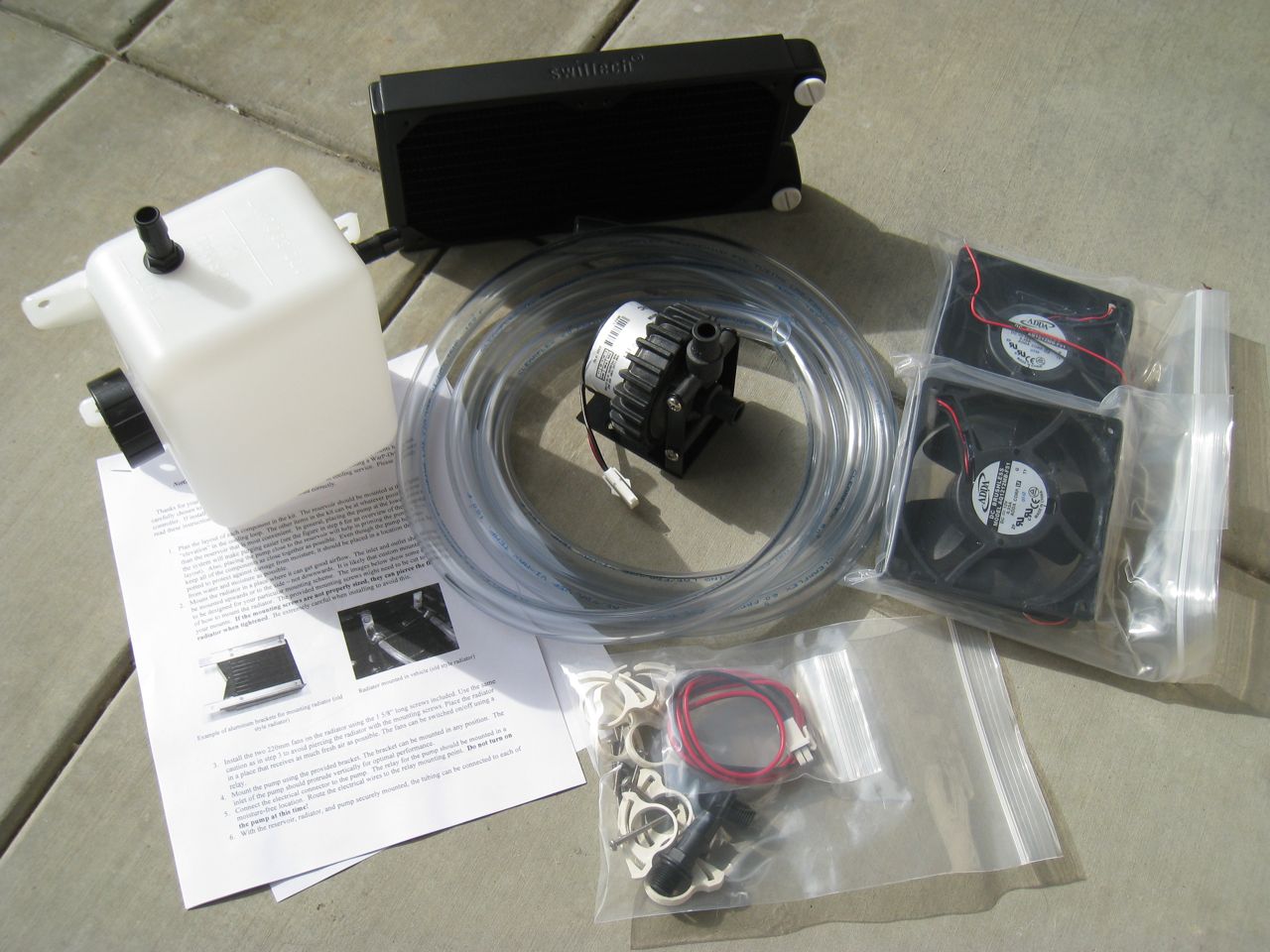
 I also got my diode and inductor from EVTV. These go with the Chennic DC-DC converter and should make it a more reliable unit.
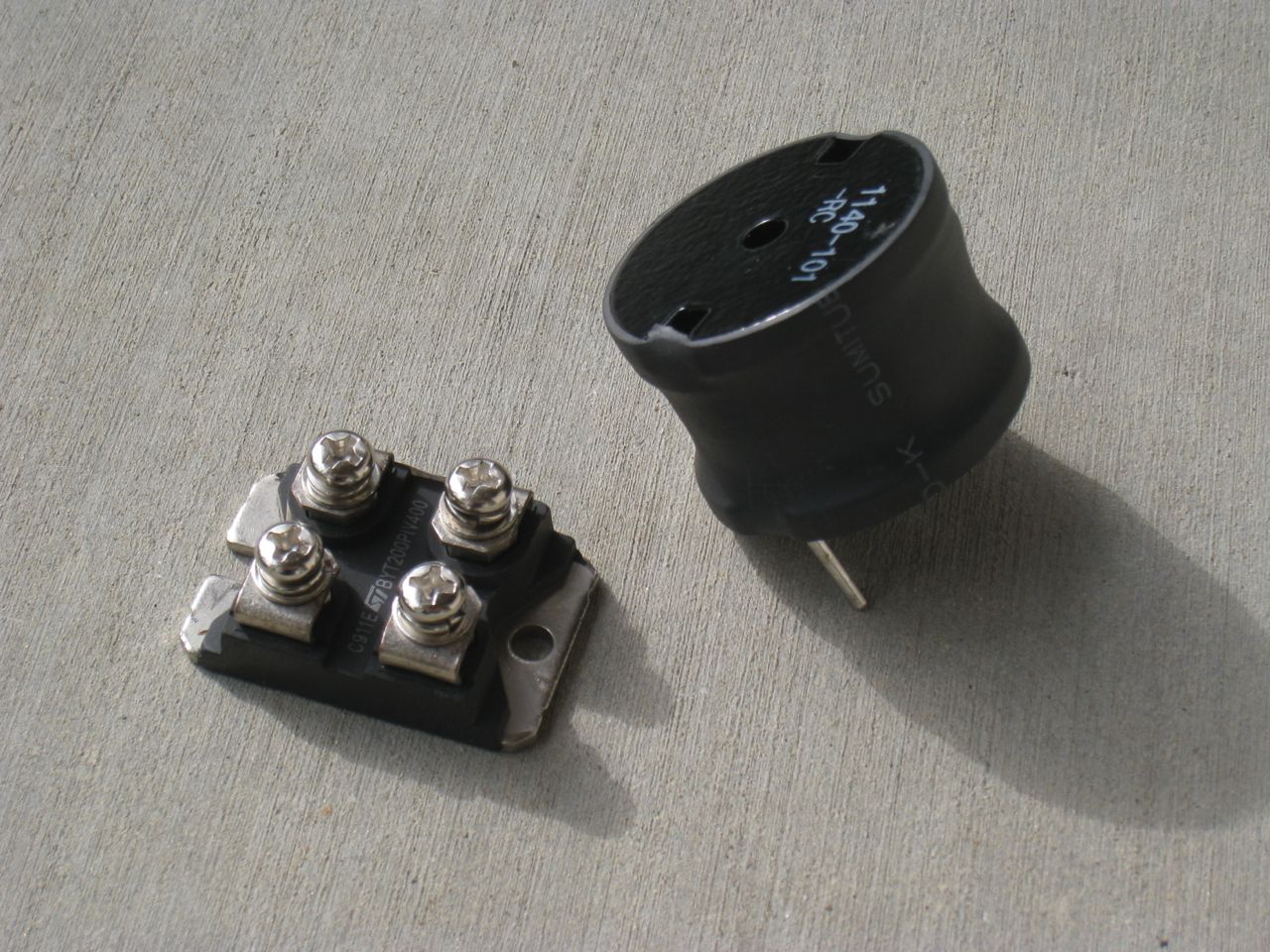 I also got my diode and inductor from EVTV. These go with the Chennic DC-DC converter and should make it a more reliable unit.
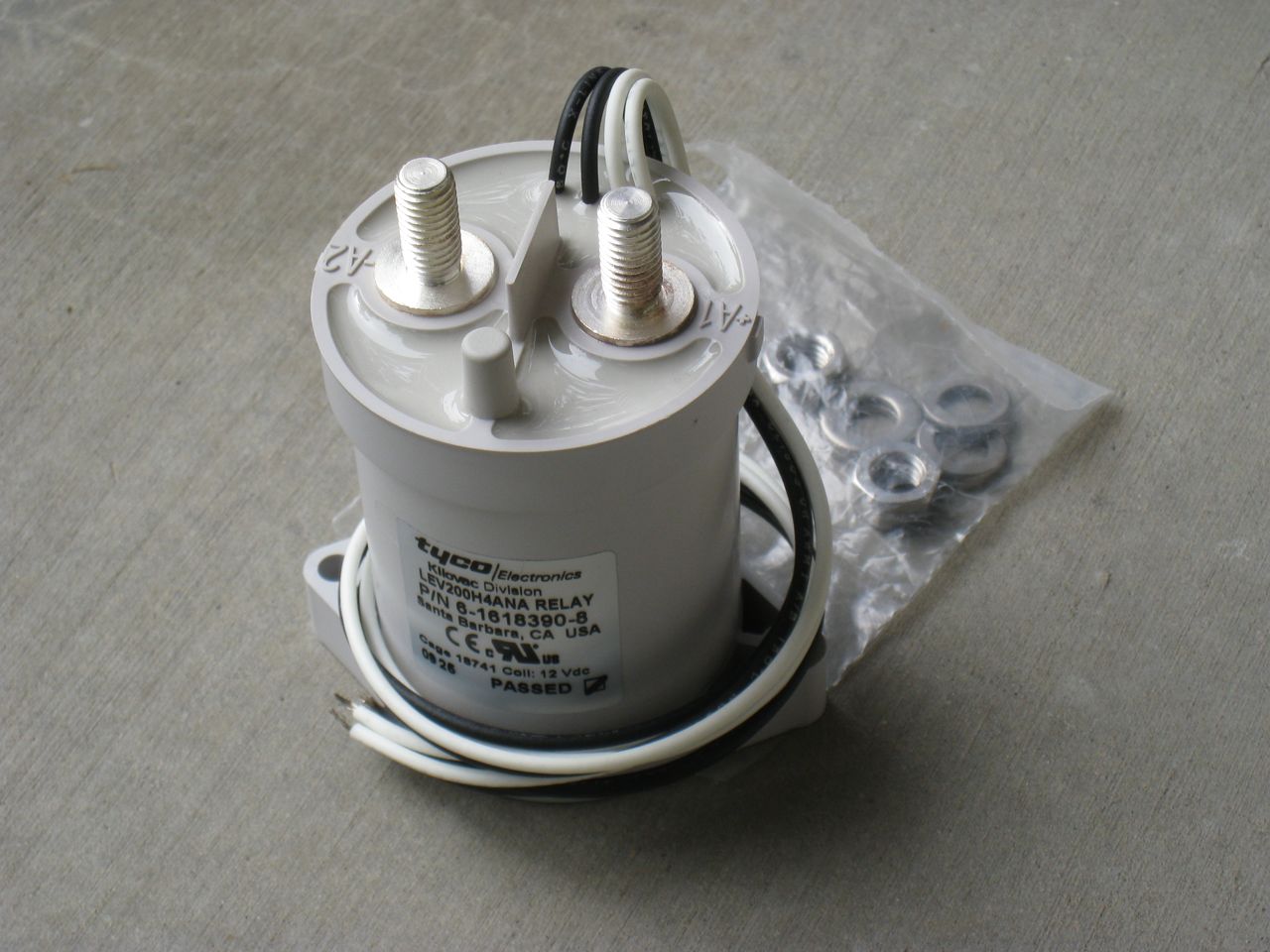
 Next up are some bits I received from Jack Rickard and the folks over at EVTV. On the left is a heavy-duty maintenance switch that I will try to install in a convenient place to disconnect the HV battery pack from the equipment under the hood. It's certainly not meant to replace a circuit breaker for emergency disconnects under load, but I'm hoping it can carry 192V across it without any issues. We'll see. On the right is a Chennic 400W DC-DC Converter for supplying the 12V system. A diode and inductor are on the way that should make this a reliable converter. It's a lot smaller than I thought it was going to be. Likewise, the switch was larger than I had expected.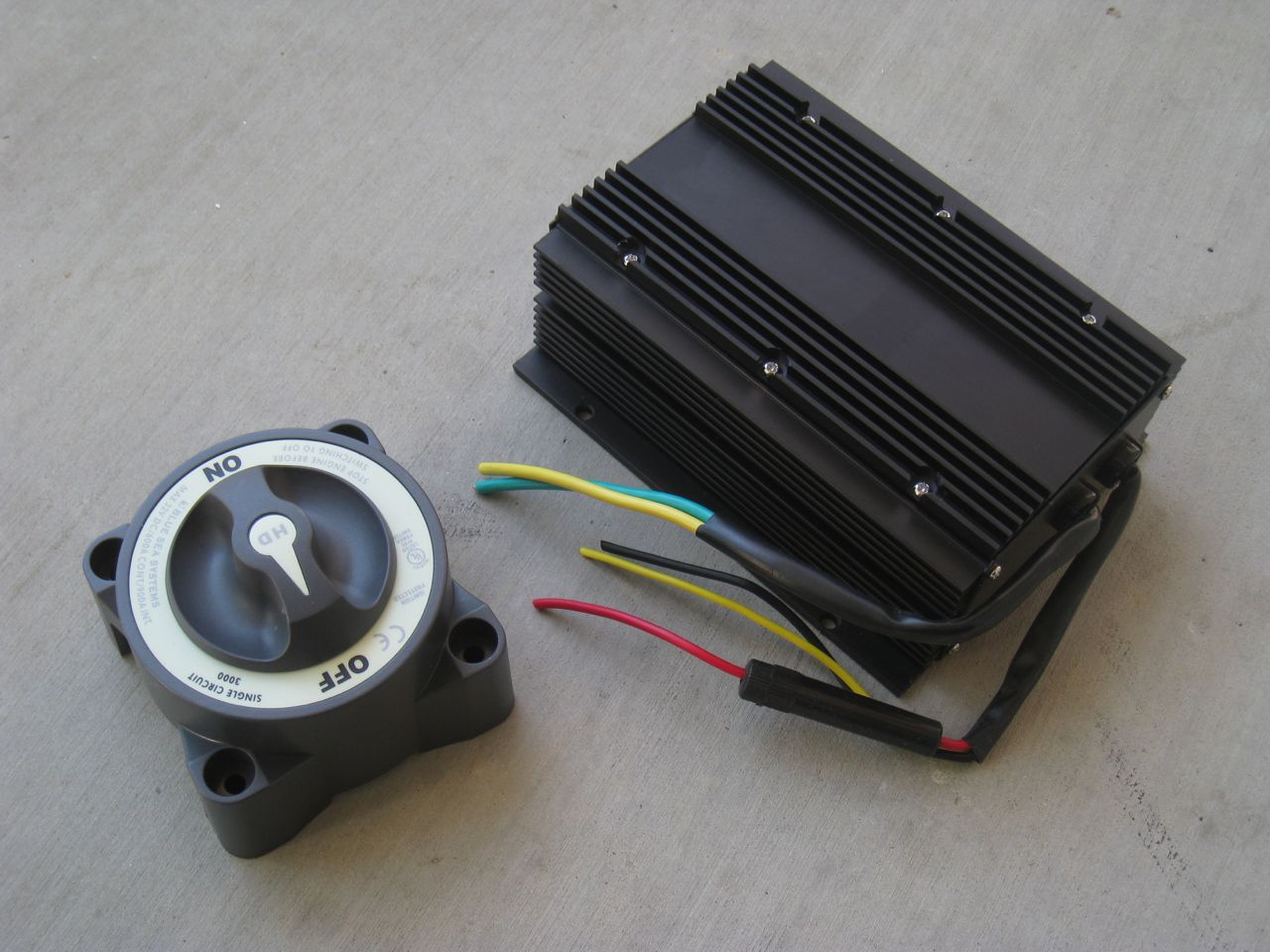
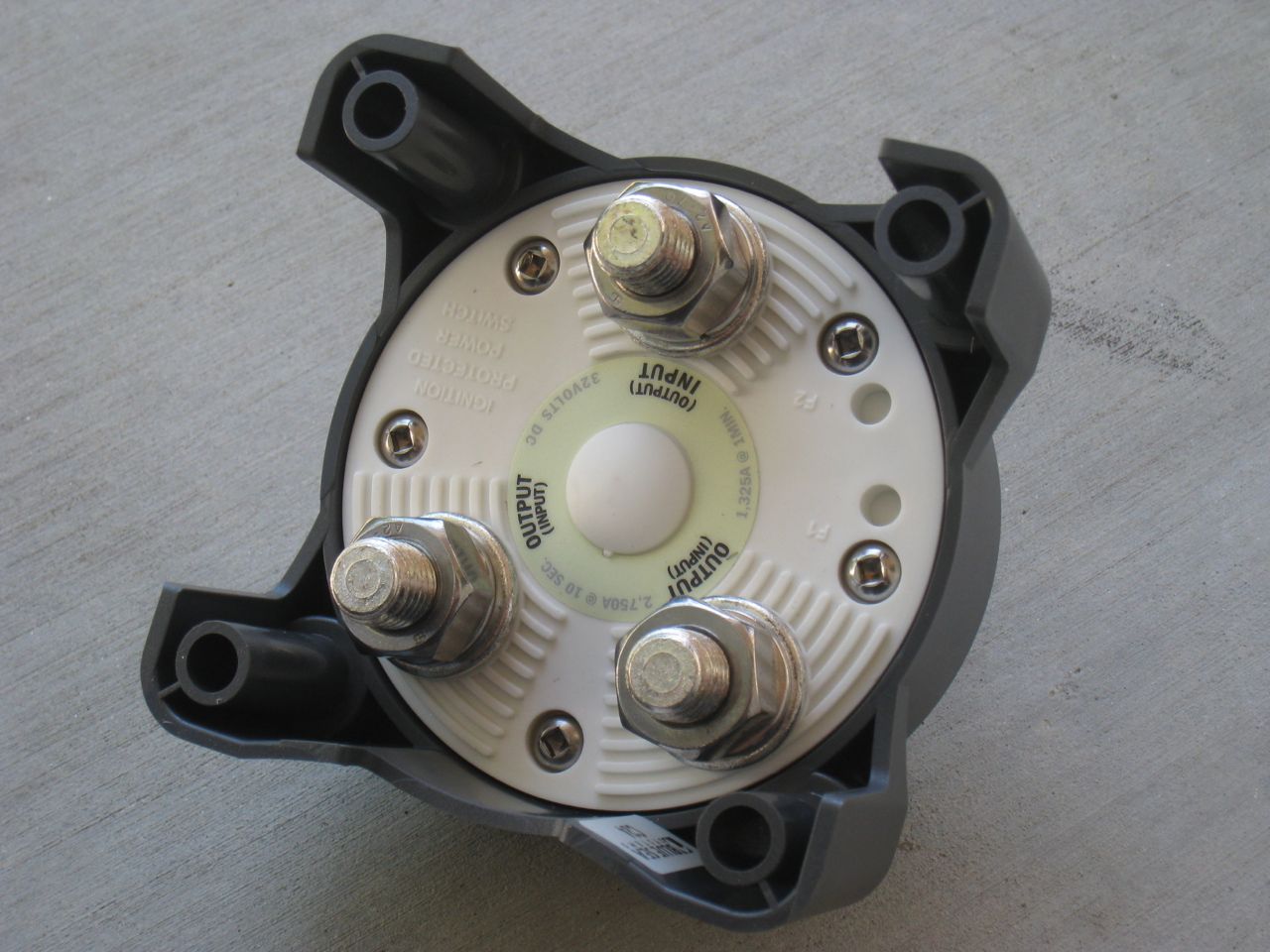 Above you can see the back of the switch. The terminals are beefy enough to accept 4/0 cable and lugs (according to the specs) and the whole assembly feels solid. I'll have to work on some more brackets/mounts to start installing all of these components where I have space under the hood. It's like a great big puzzle.
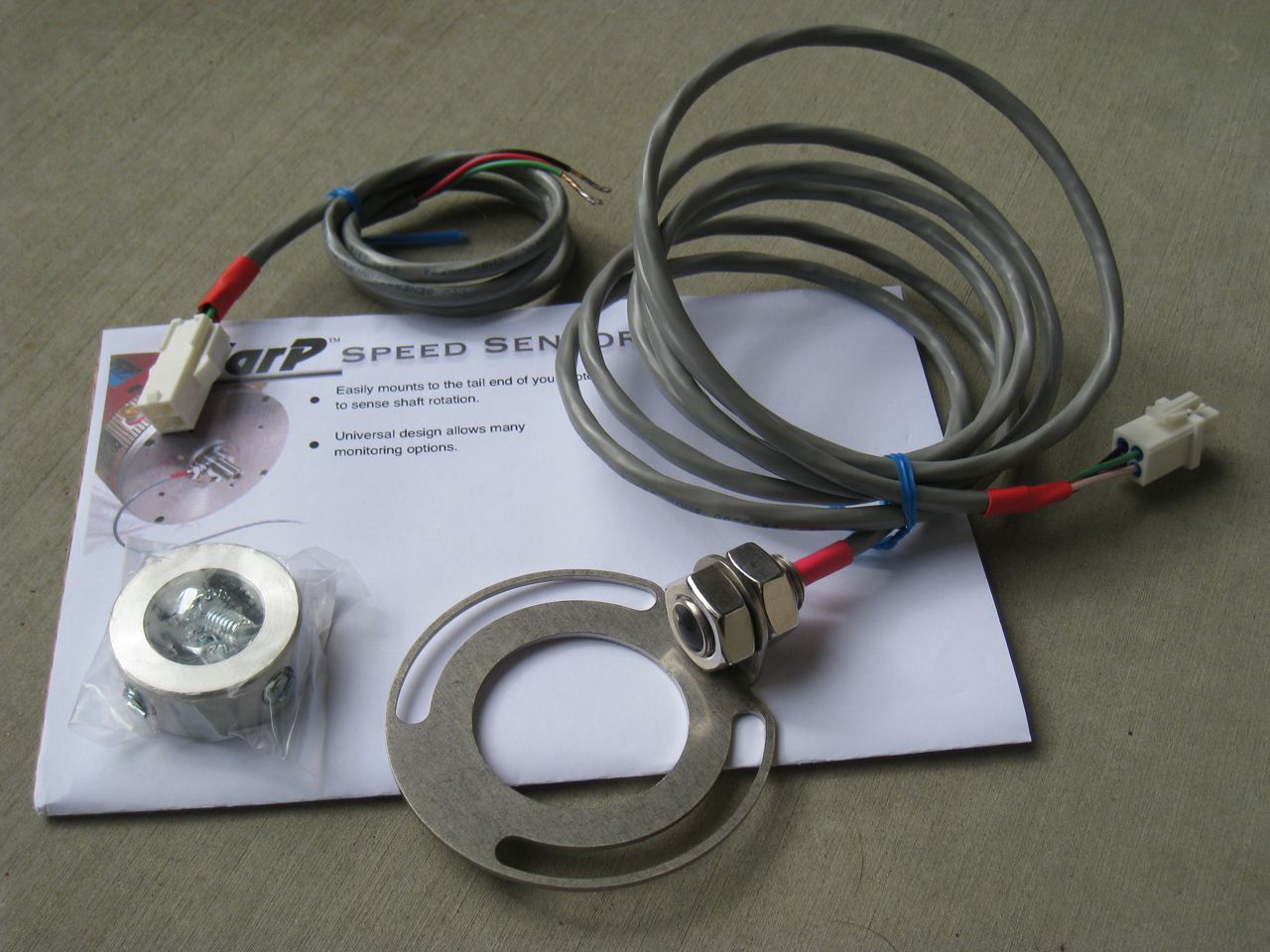
 I also installed the motor speed sensor today. This little unit is extremely simple to mount and the only real trouble I ran into was to remove a tiny bit of sheet metal from the unibody that interfered with slipping the sensor collar over the commutator shaft. A bit of grinding and things were looking good.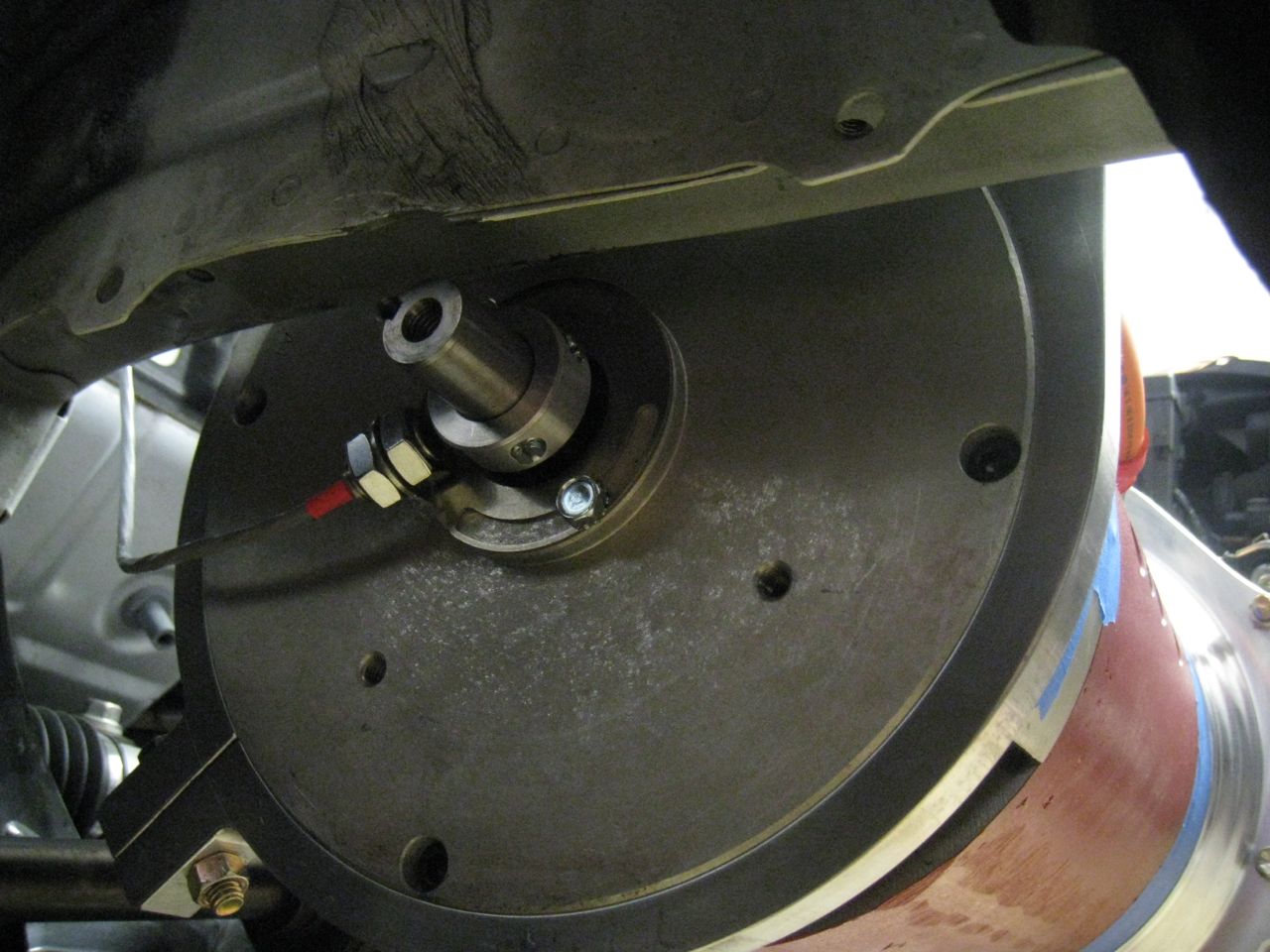
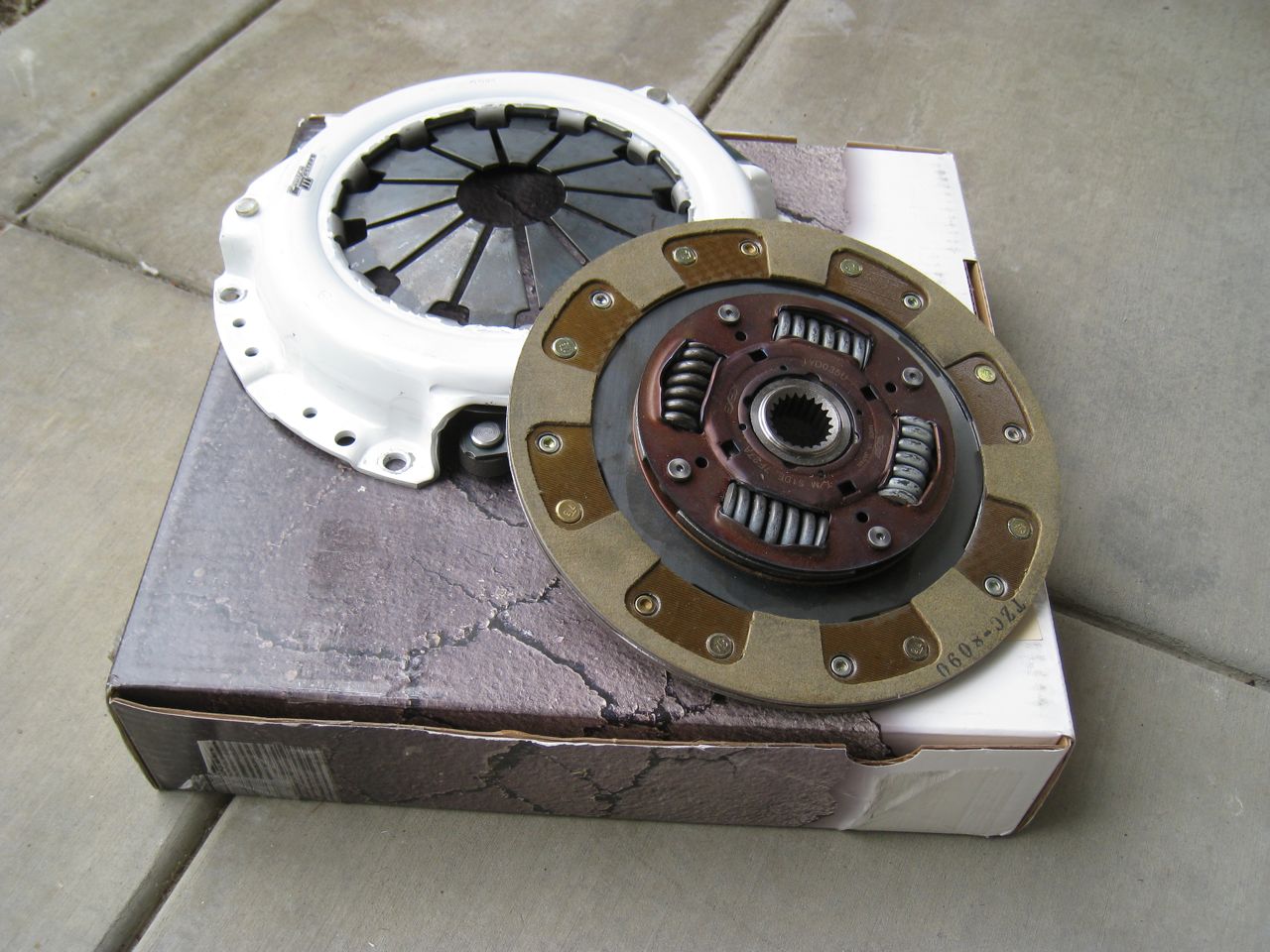
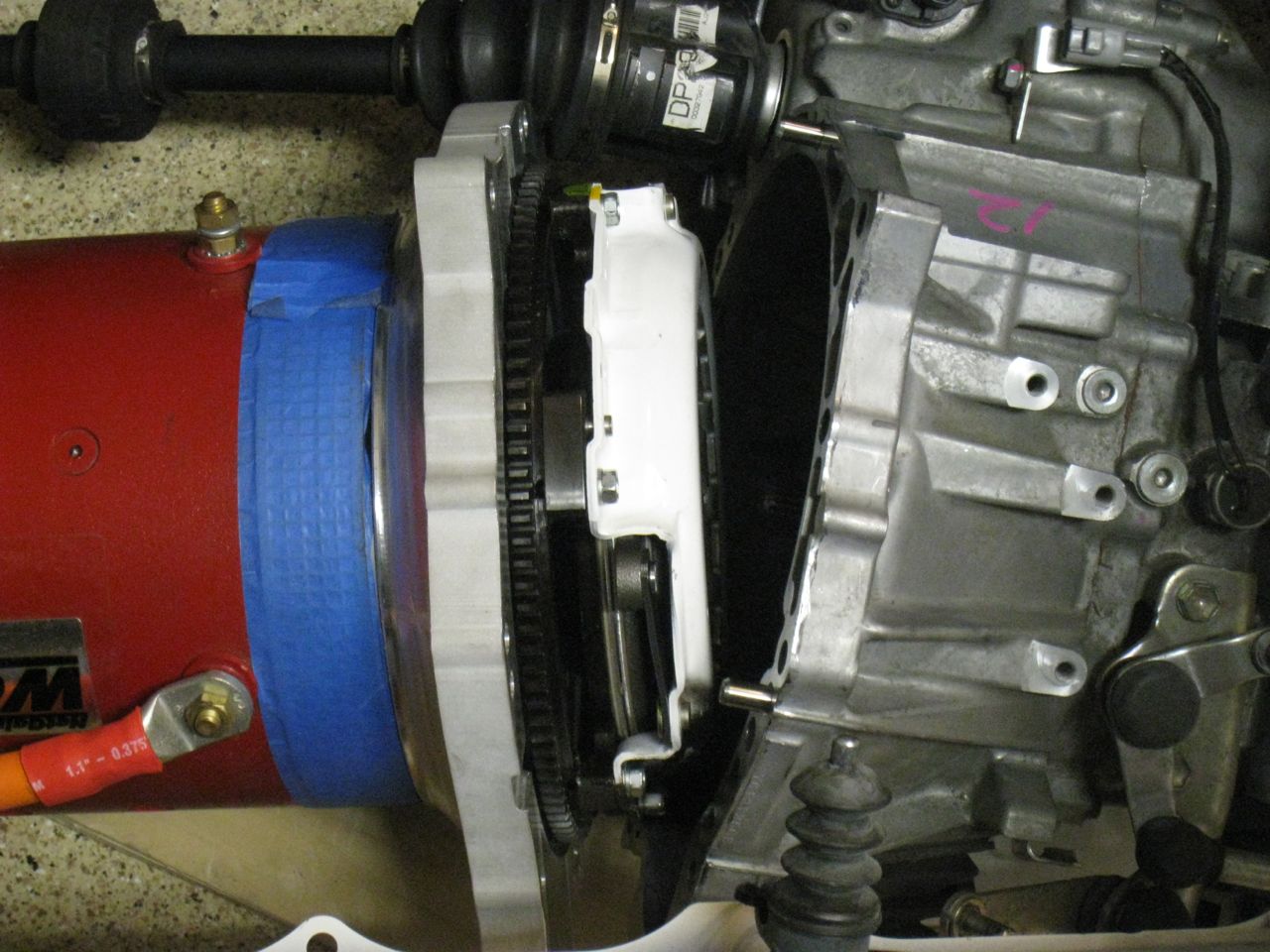 I moved the motor side assembly toward the transaxle and made sure that the input shaft engaged the clutch disc. A quick way to test this is to move the flywheel at this point and check that the driveshafts coming out of the transaxle rotate in accordance. Bringing the two halves together was a tedious process of going around the flange and tightening down all the bolts to torque specs.
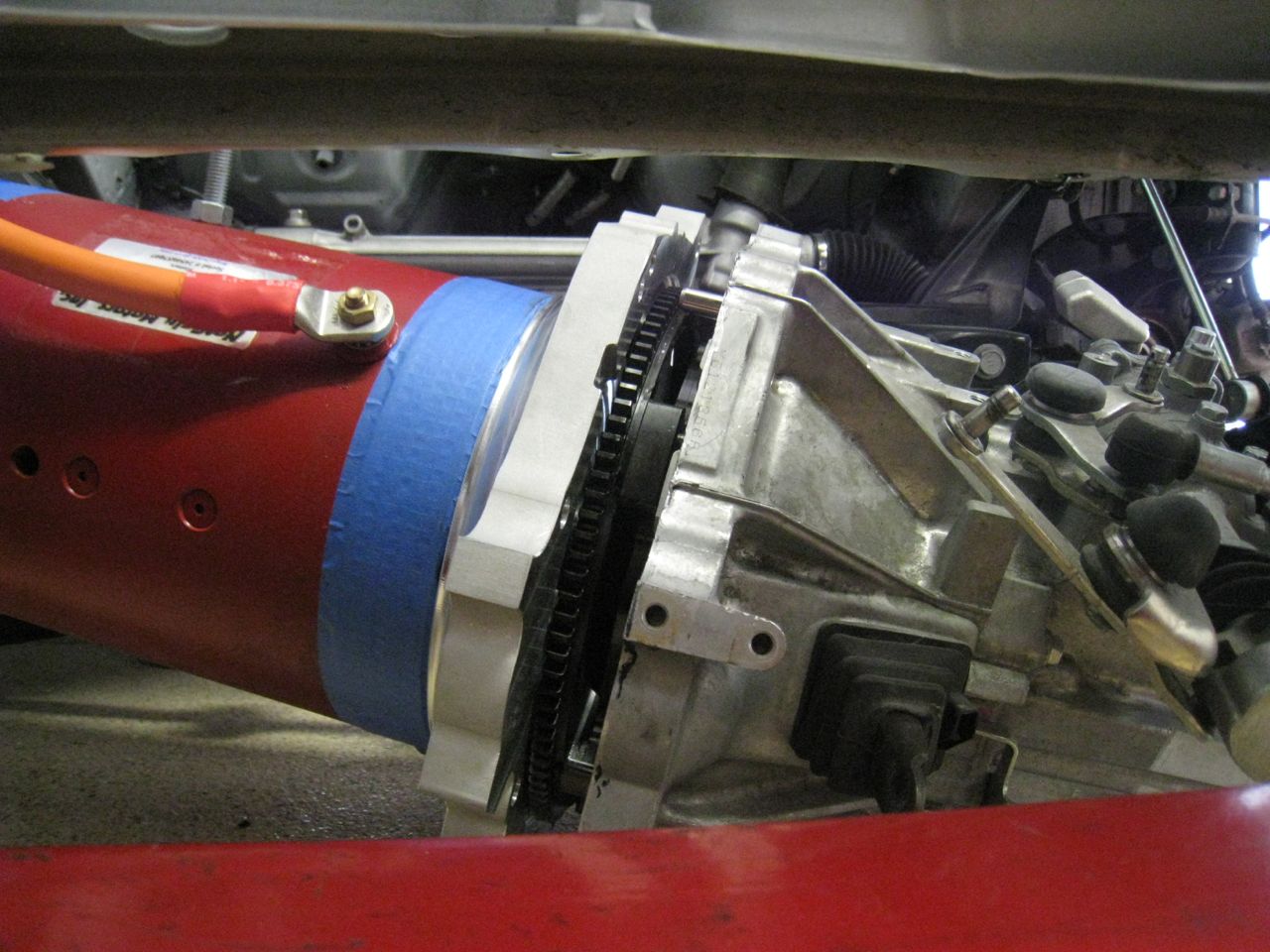 The completed drivetrain assembly was hoisted into position and I proceeded to secure it to the chassis by bolting up the OEM motor mounts and then the tail shaft mount that was custom fabricated. This was another headache from a home-garage-logisitcs perspective, but I managed to get it done (I also managed to hit the windshield in the process and create a crack at the edge…will be replaced). Once everything was verified to be in the right position, I began the process of torquing down all the mount bolts and removing the engine hoist. The next two photos show the drivetrain suspended in the car, finally!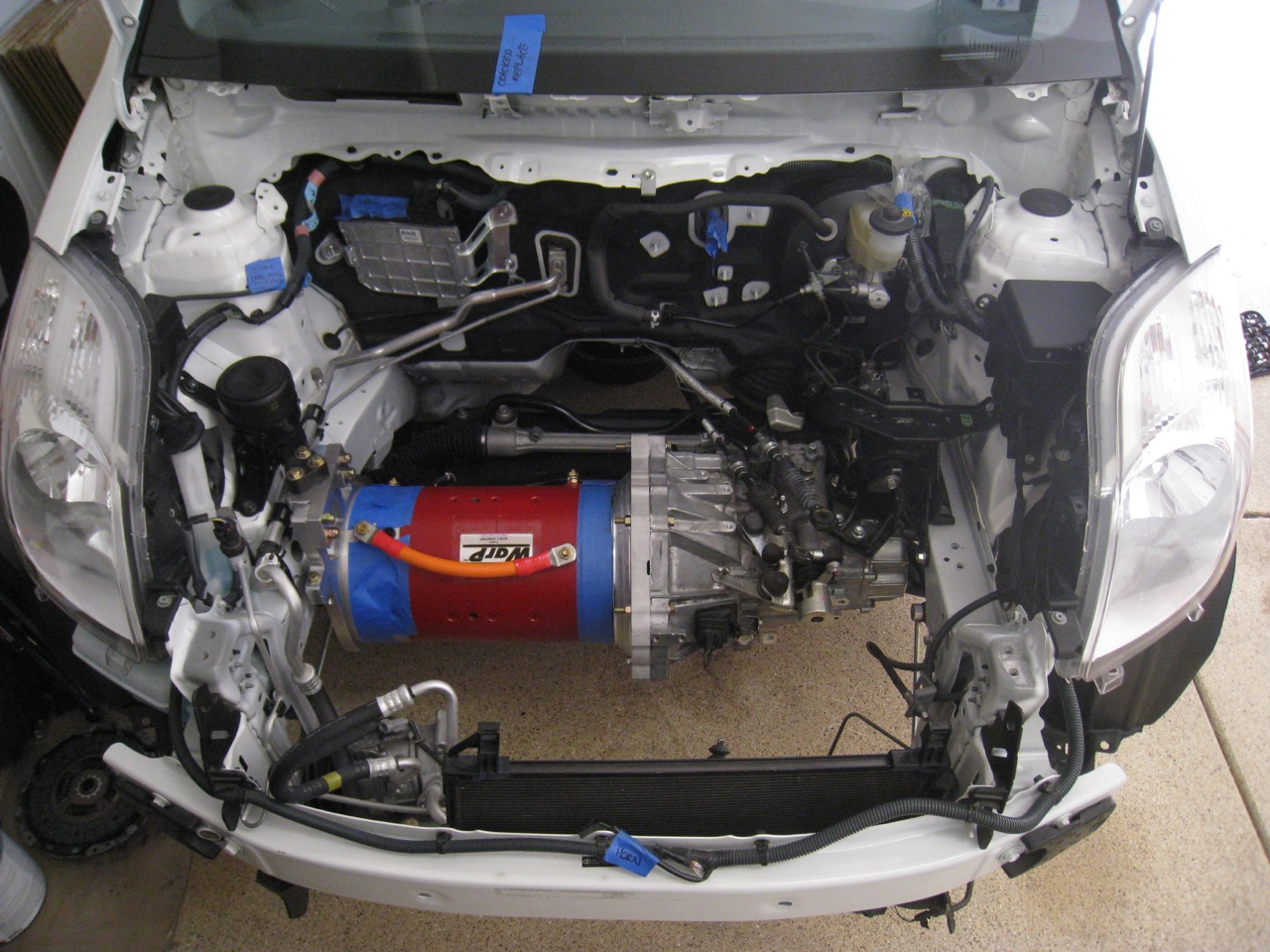
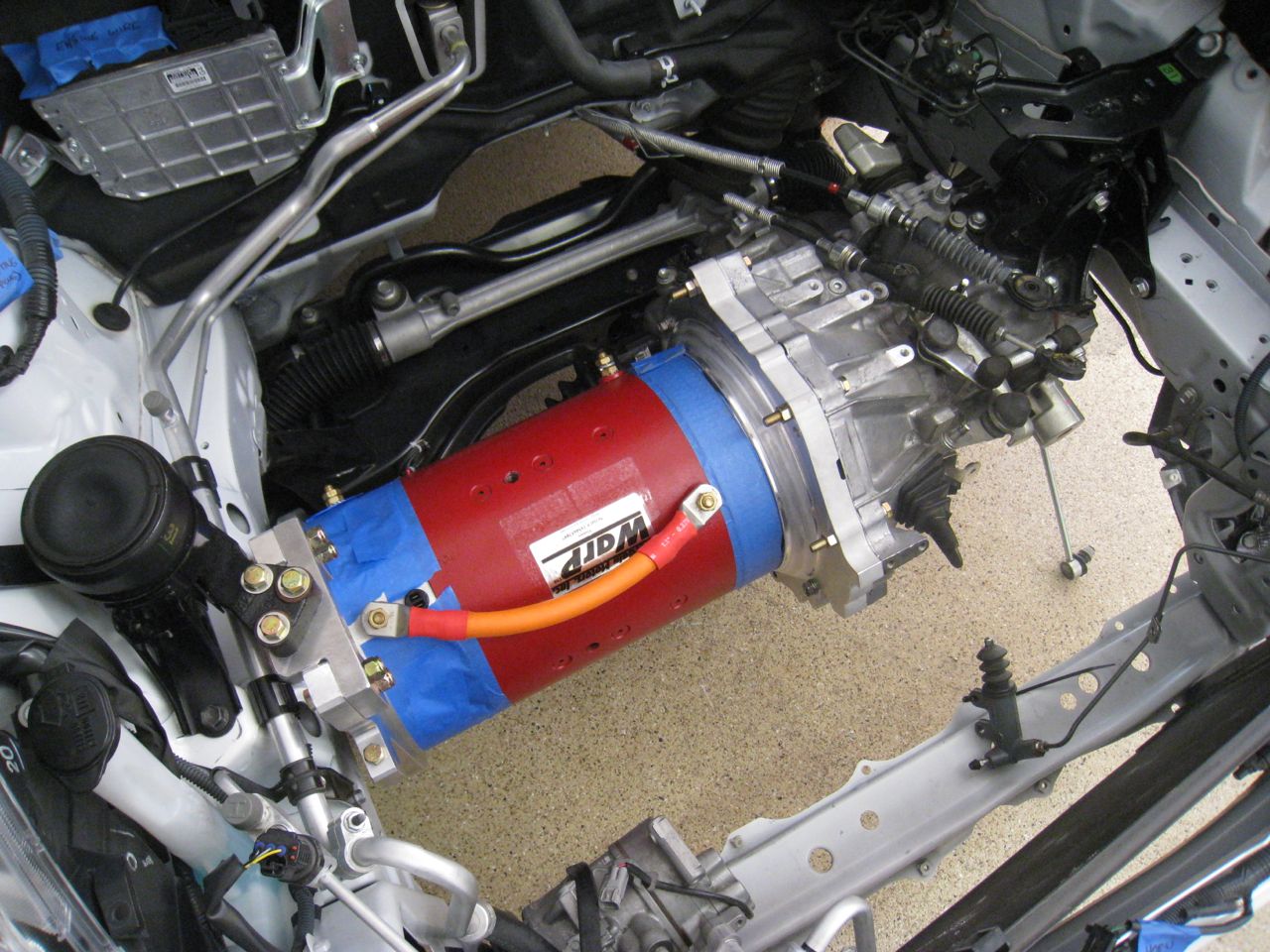 As you can see it looks really nice mounted in the car and I think the engineering and quality of the machine work paid off. Finally, I went about re-installing all the original equipment and hardware that is needed to shift and operate the clutch. I cleaned up and re-greased all the linkage pivots to ensure really smooth operation. It went together quickly as I took photos of the disassembly, wrote down notes, and also have the repair manual handy. Not to mention, it was pretty straight forward.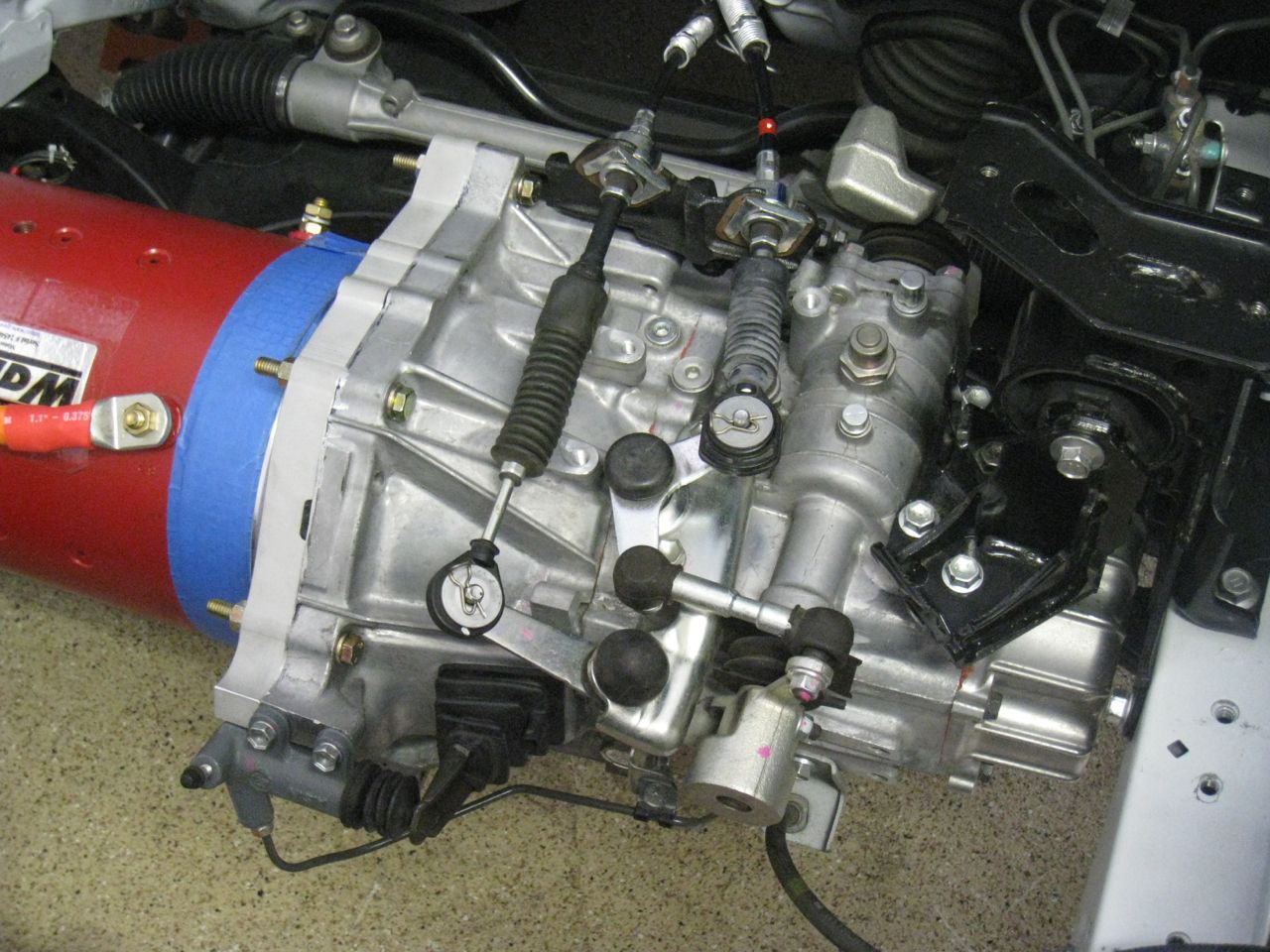
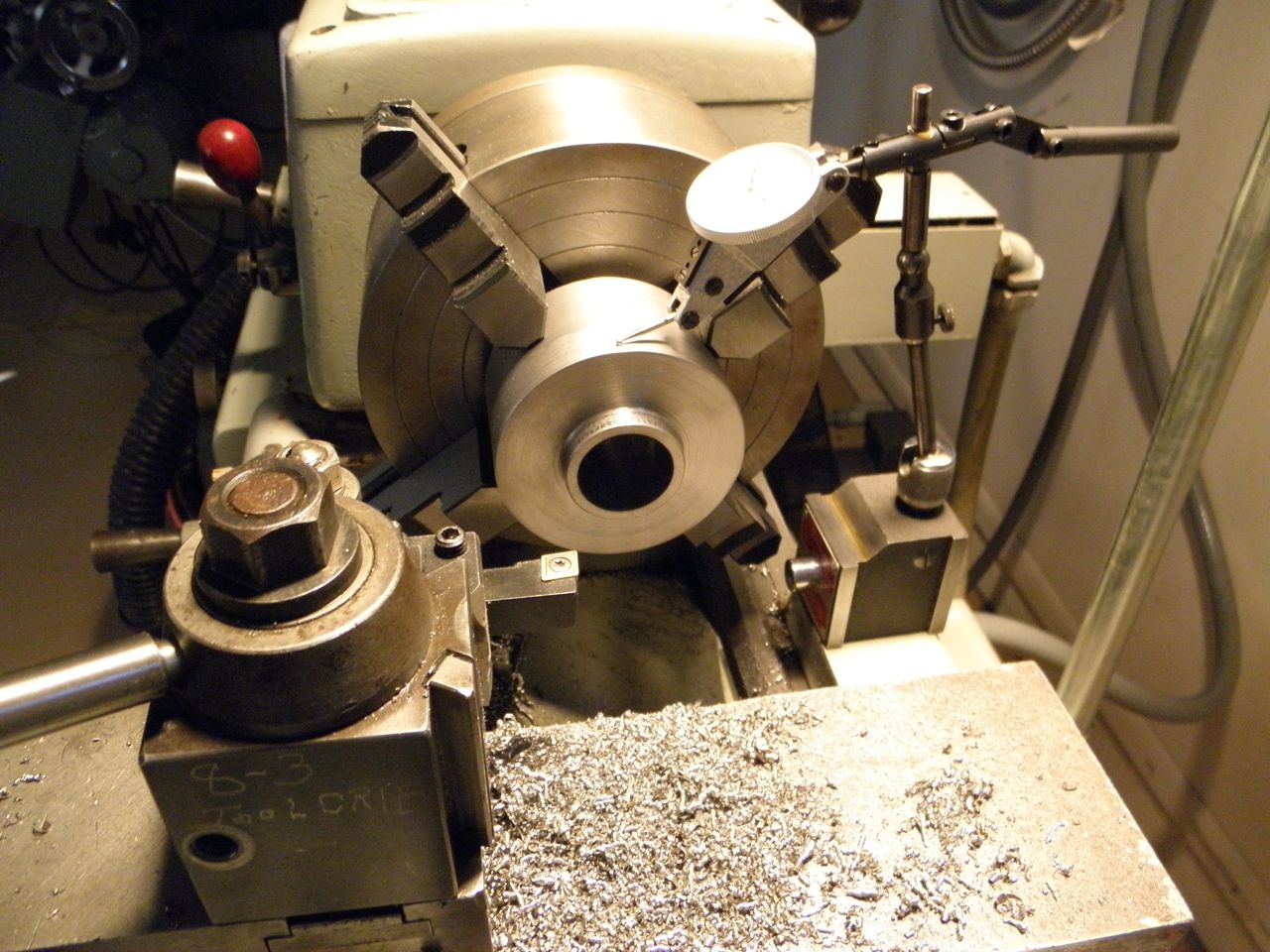
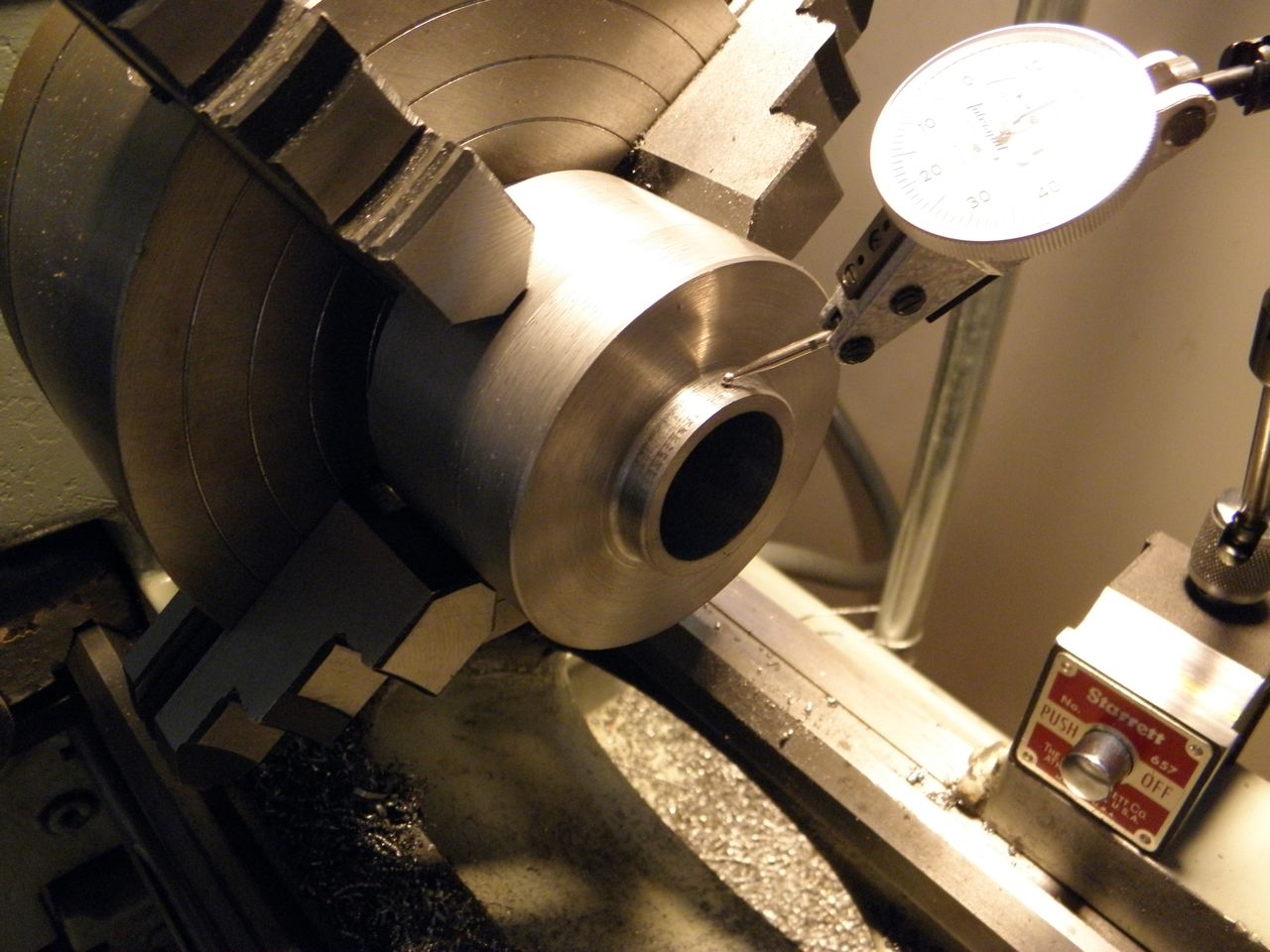
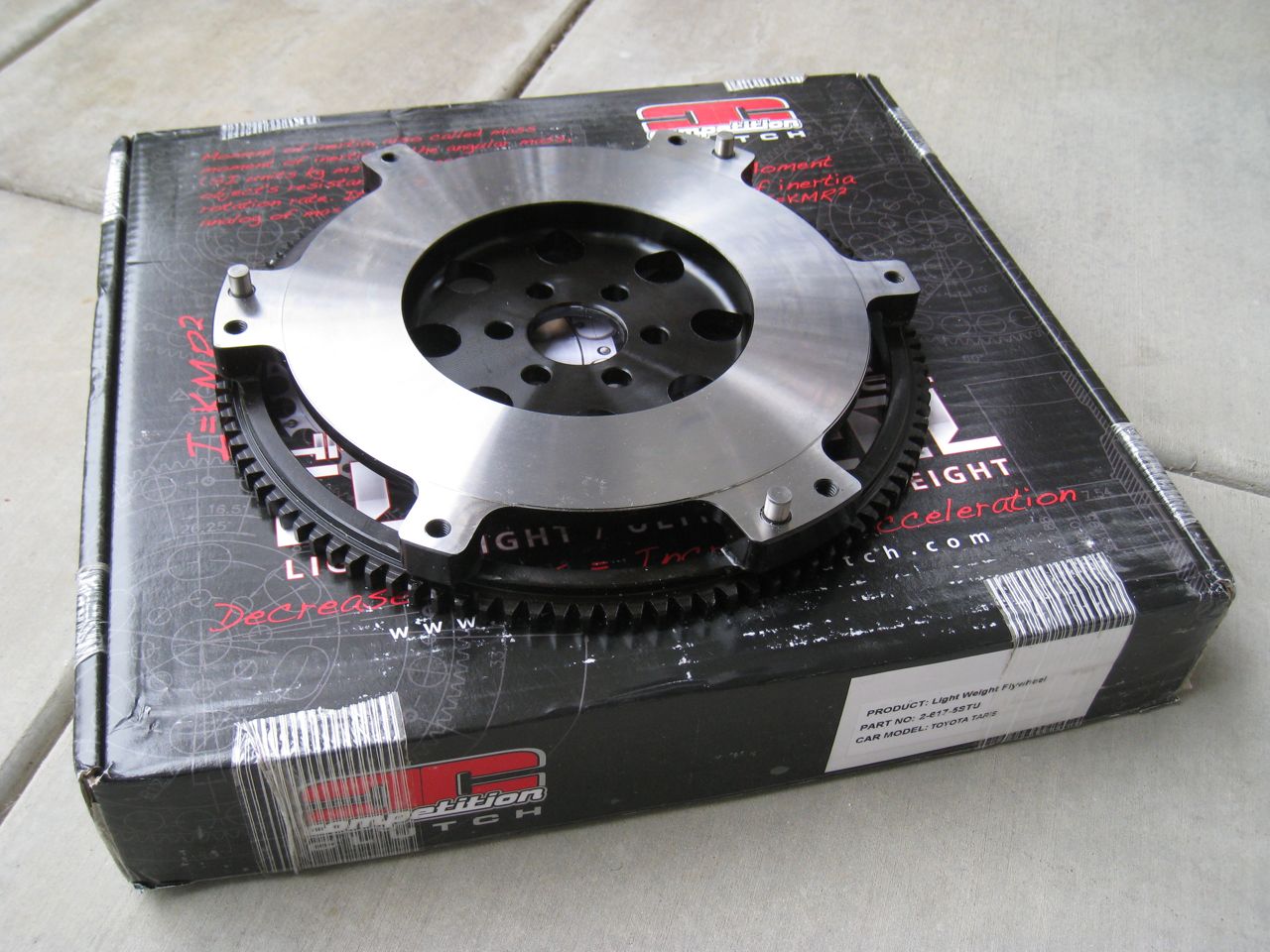
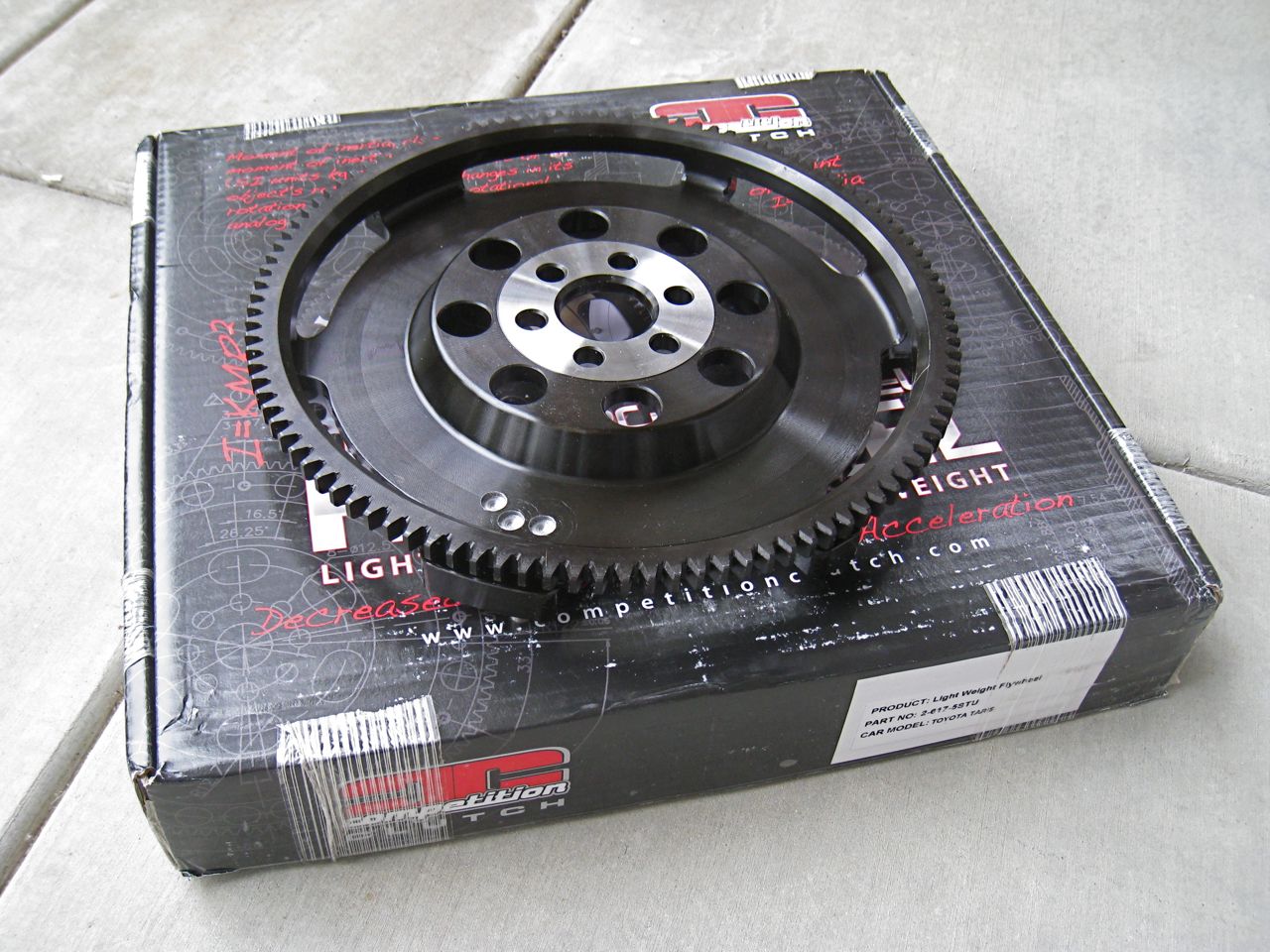
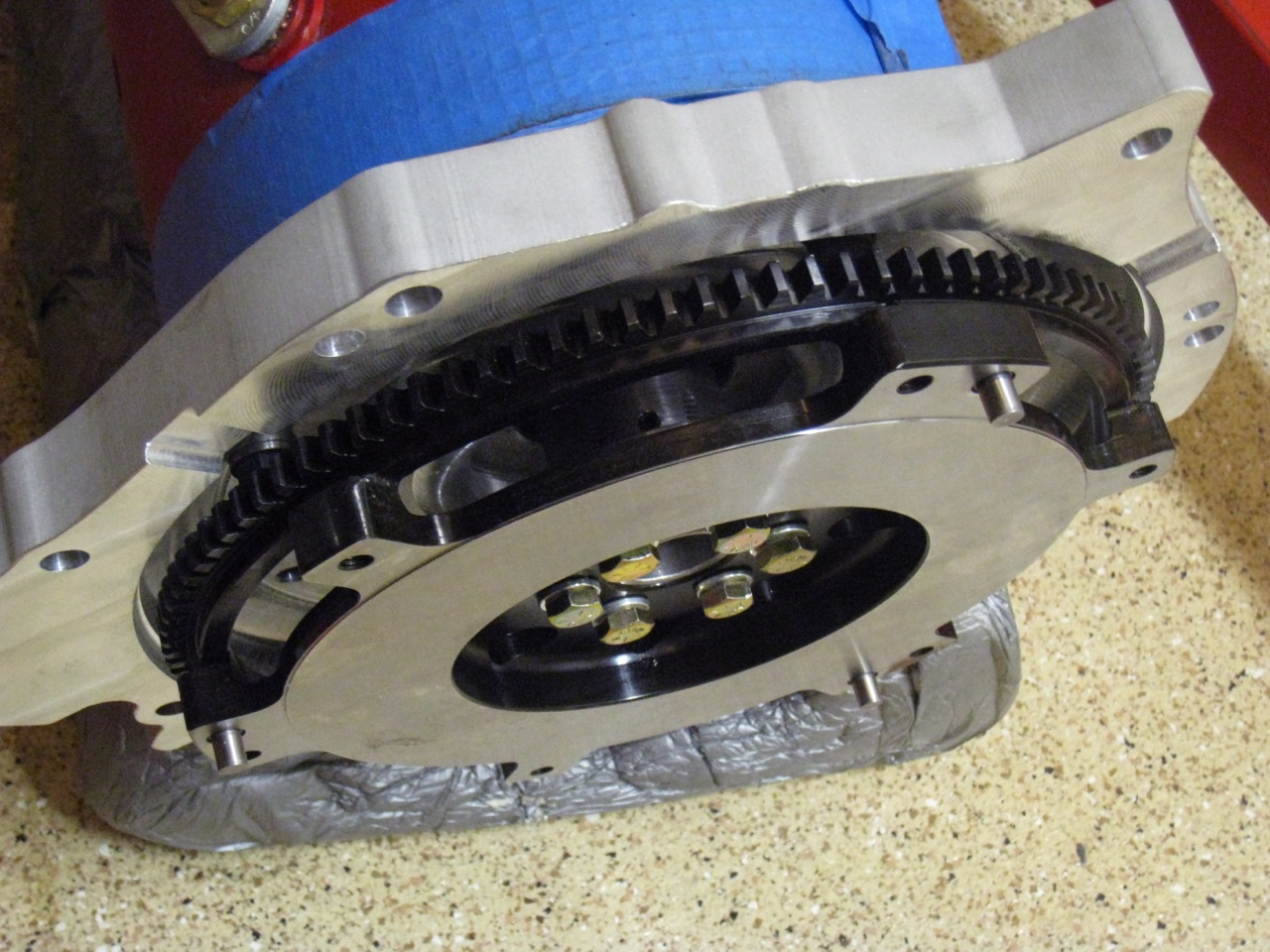 Installing this piece requires some care and precision as the distance from the face of this part to the face of the transmission adapter flange to ensure a proper engagement of the drivetrain assembly.
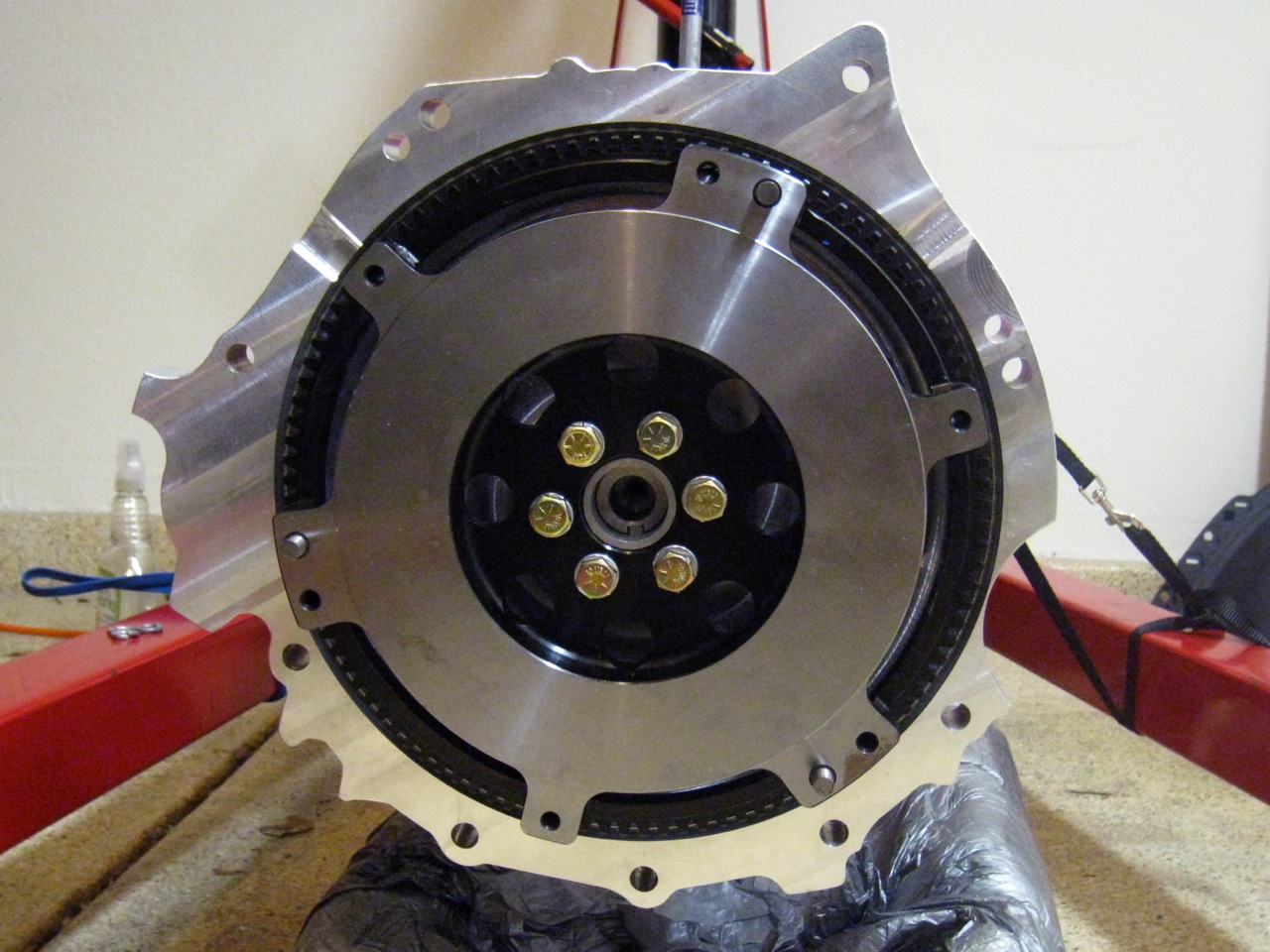
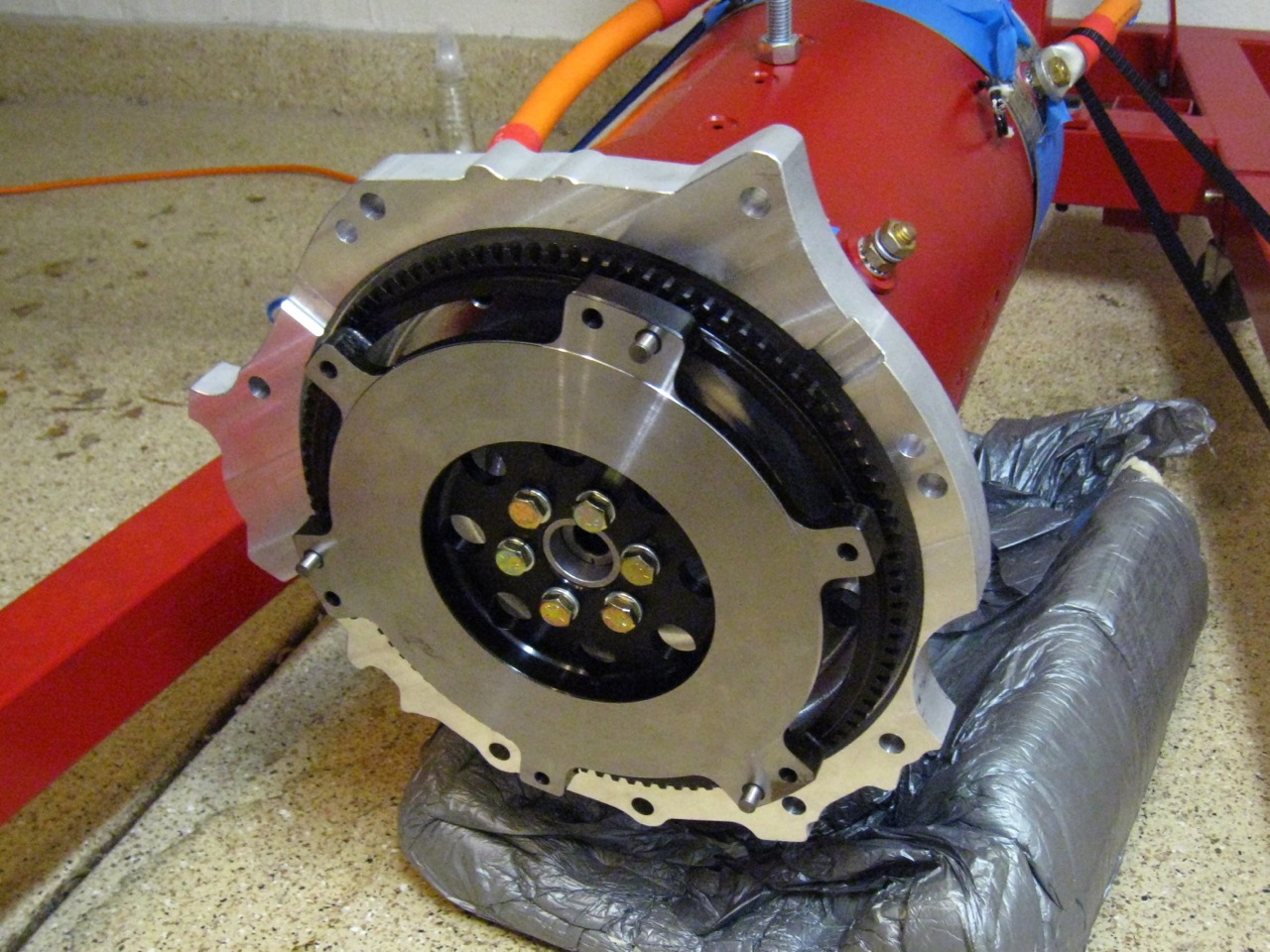 I will try to post a video of the motor spinning up with the flywheel mounted. The balance seems very good at speed although we did notice some small vibration as the motor comes to a stop. The test was only done with a 12V battery so no real power was thrown at it yet. Next step is to take the flywheel off and get it balanced to the clutch before putting it all back together and into the car.
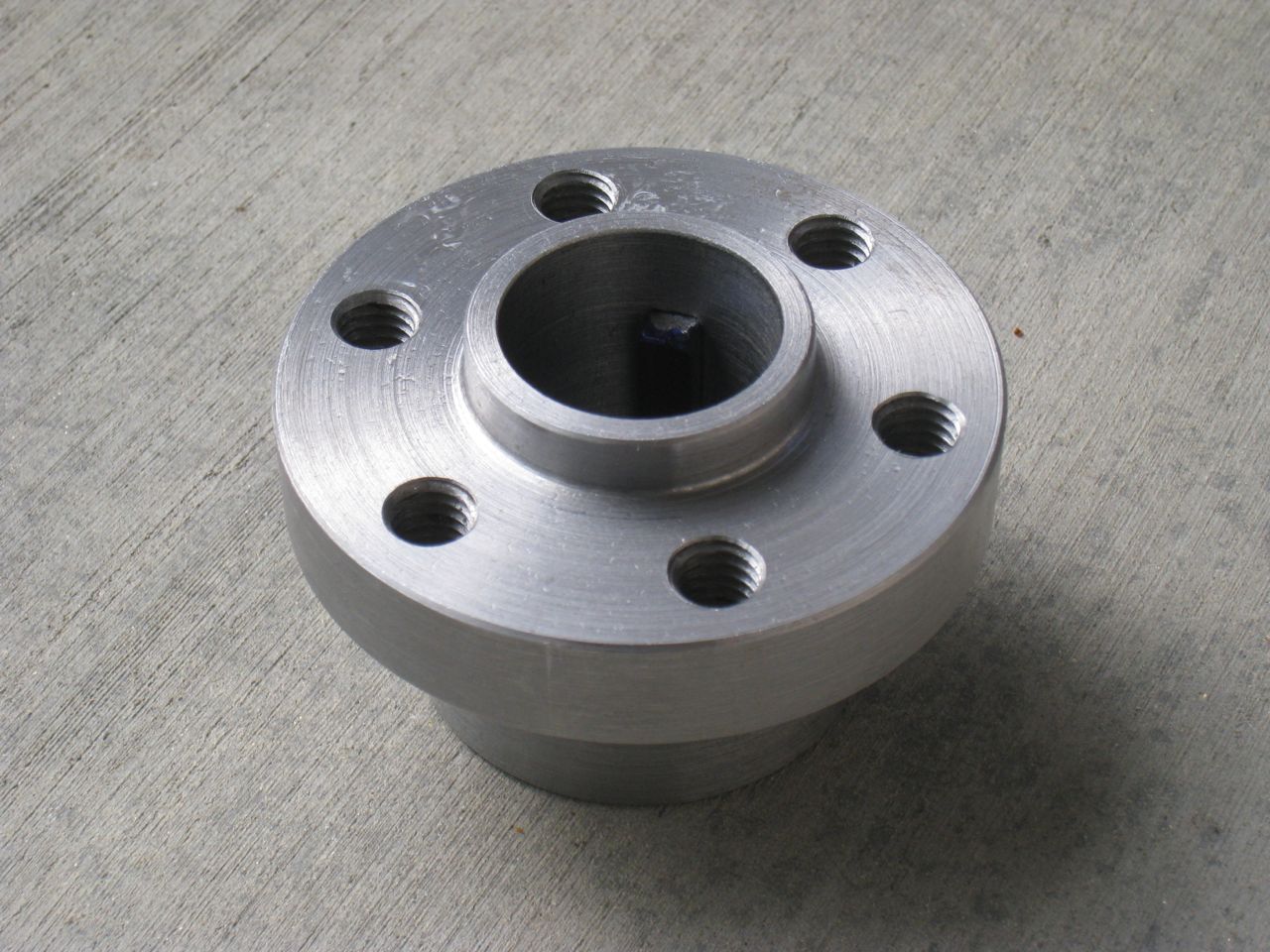
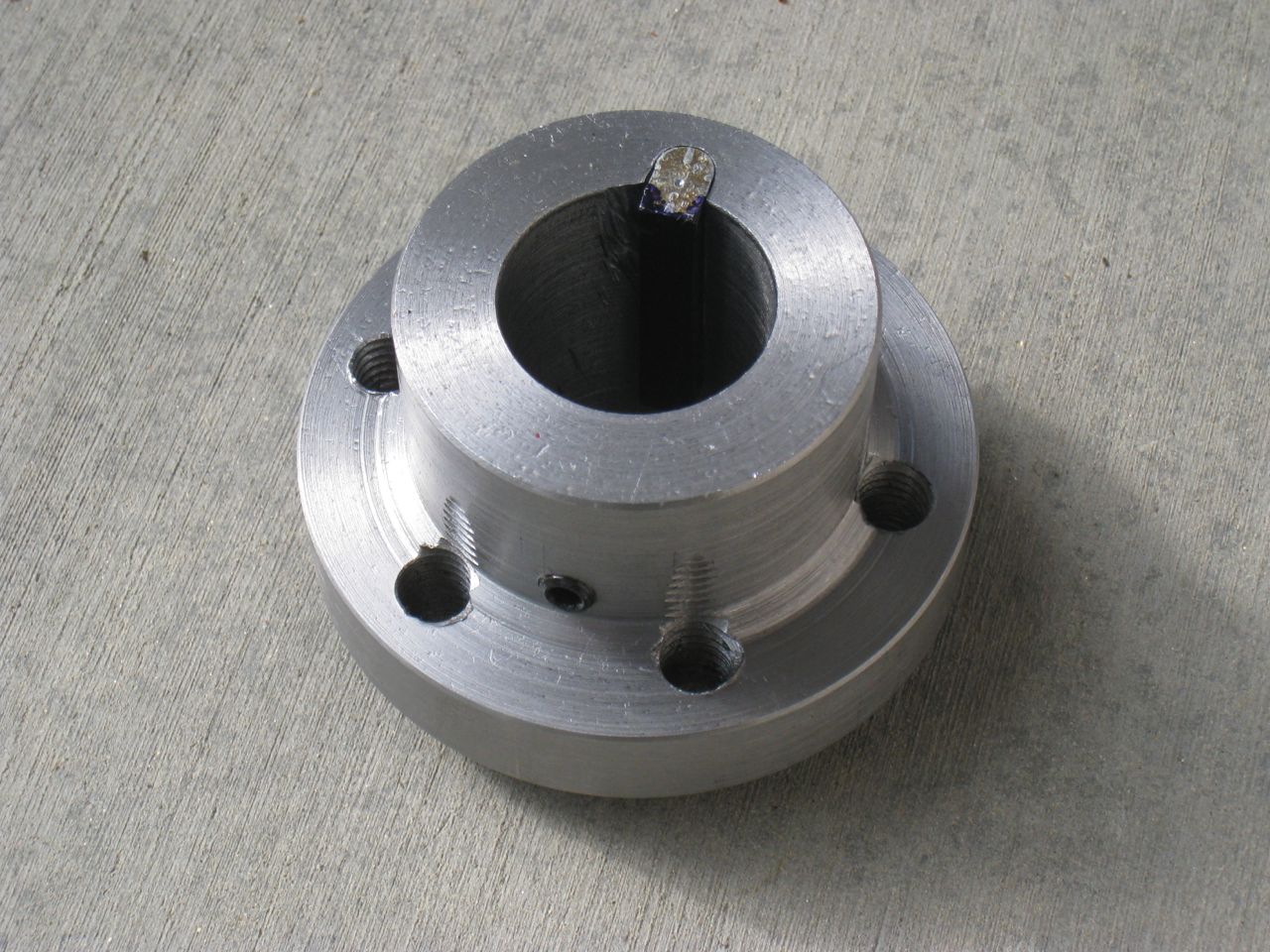 Installing this piece requires some care and precision as the distance from the face of this part to the face of the transmission adapter flange to ensure a proper engagement of the drivetrain assembly.
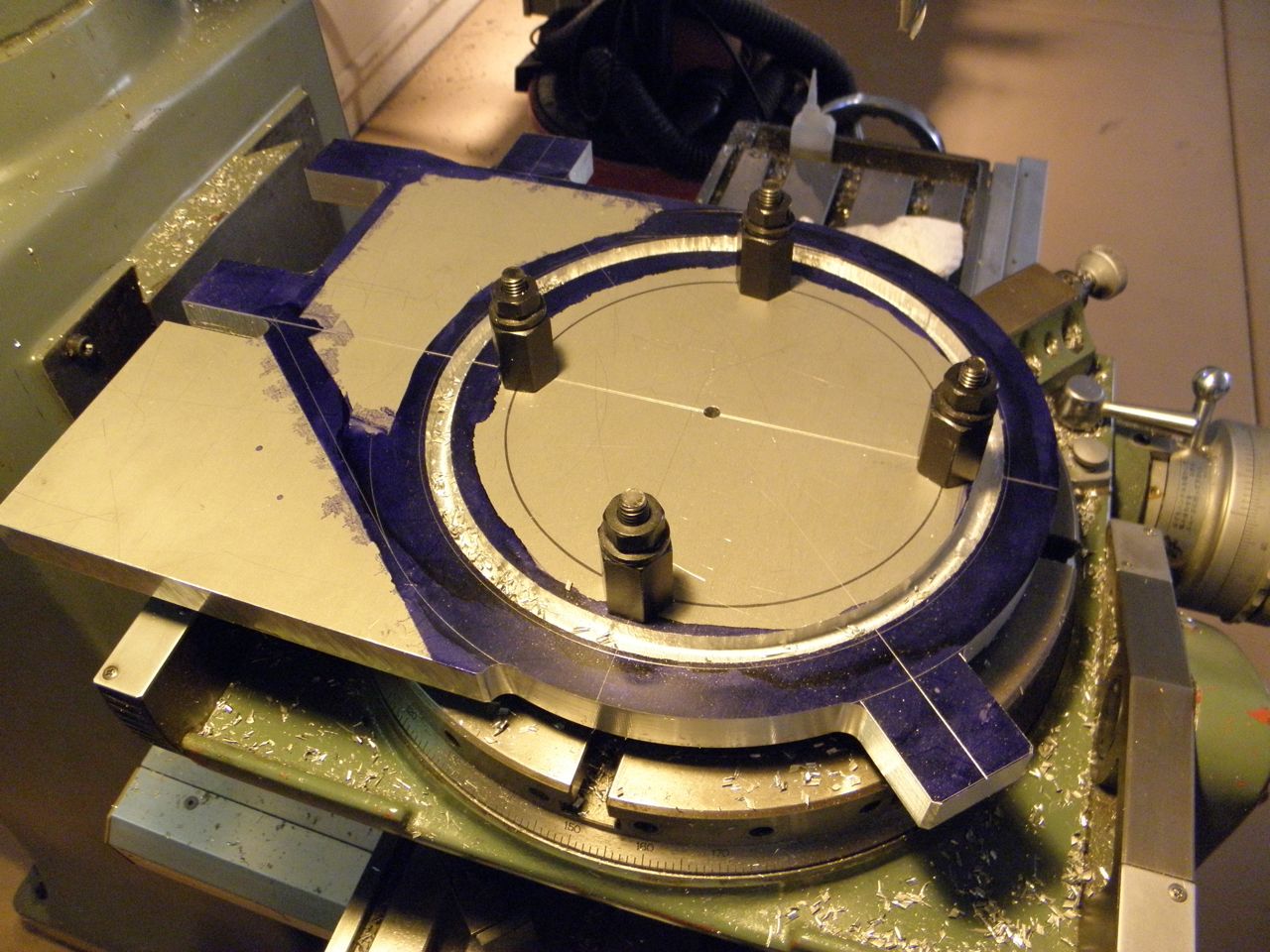
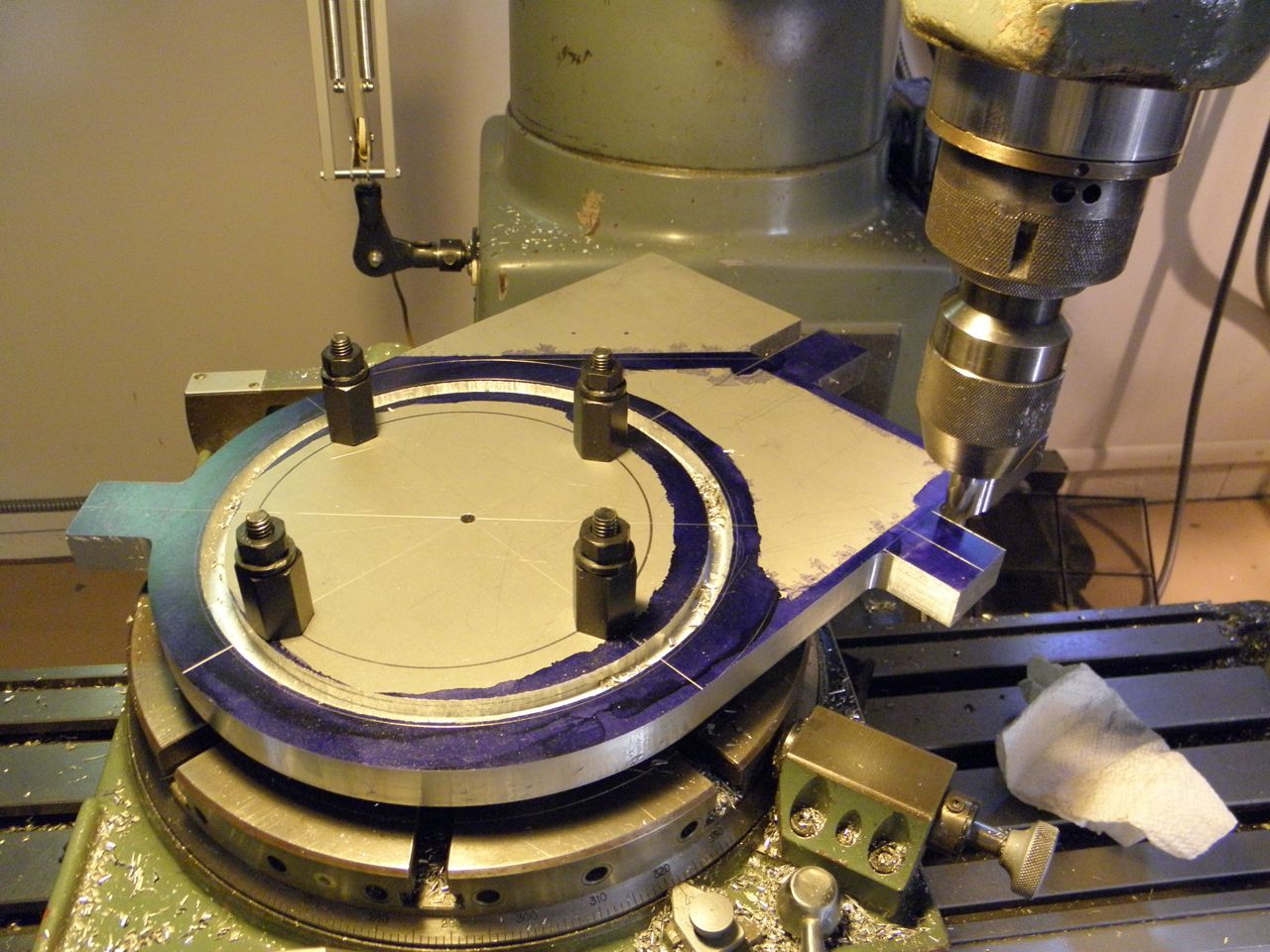
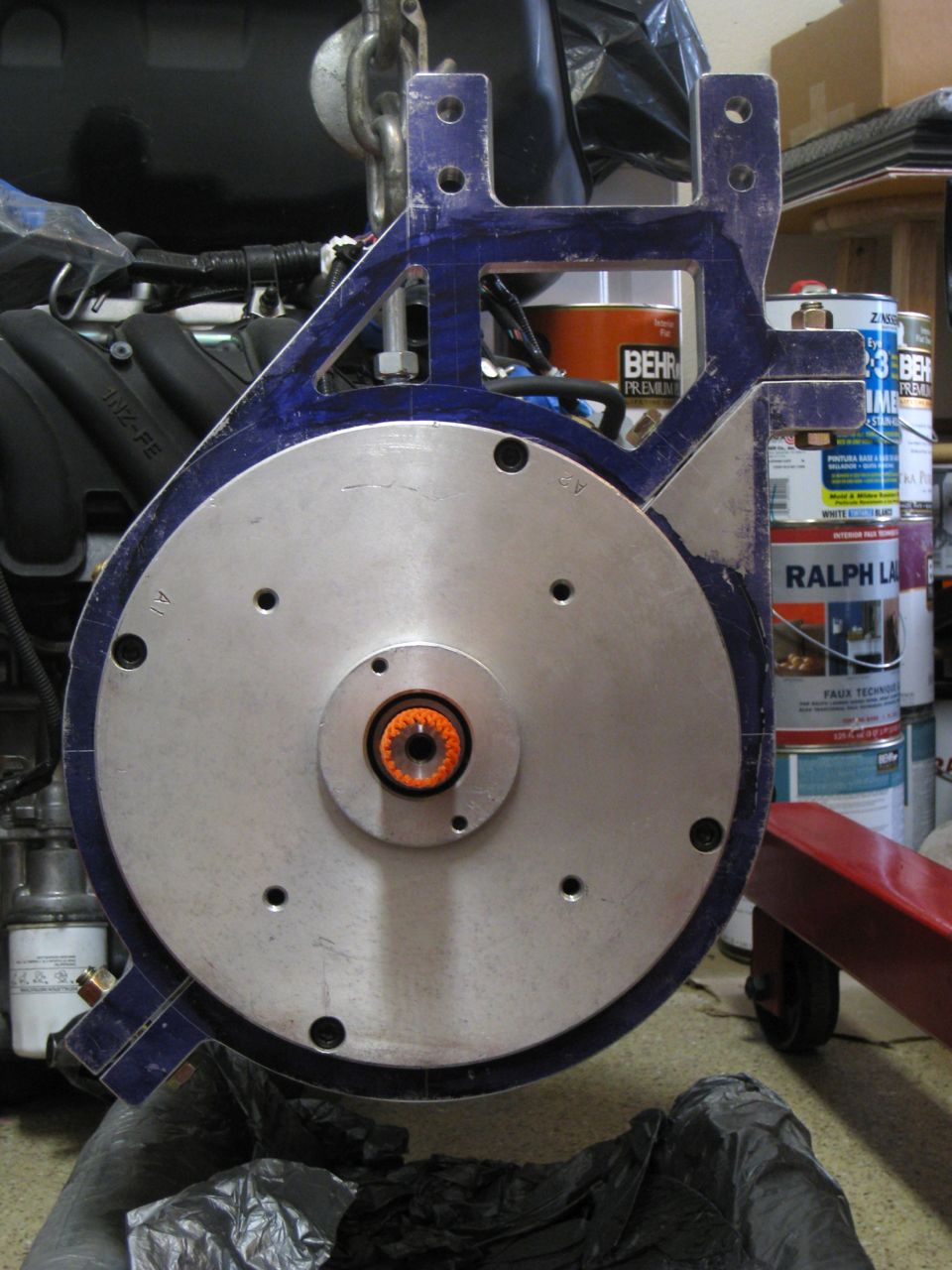 The cradle portion seen above and below is two-part construction. A top and bottom piece surround the motor with 3 bolts securing the halves together. The blue surface seen in the photos is a marking fluid used during layout and machining (seen previous posts for more info) and is temporary. Below is a photo that shows the bolt locations clearly: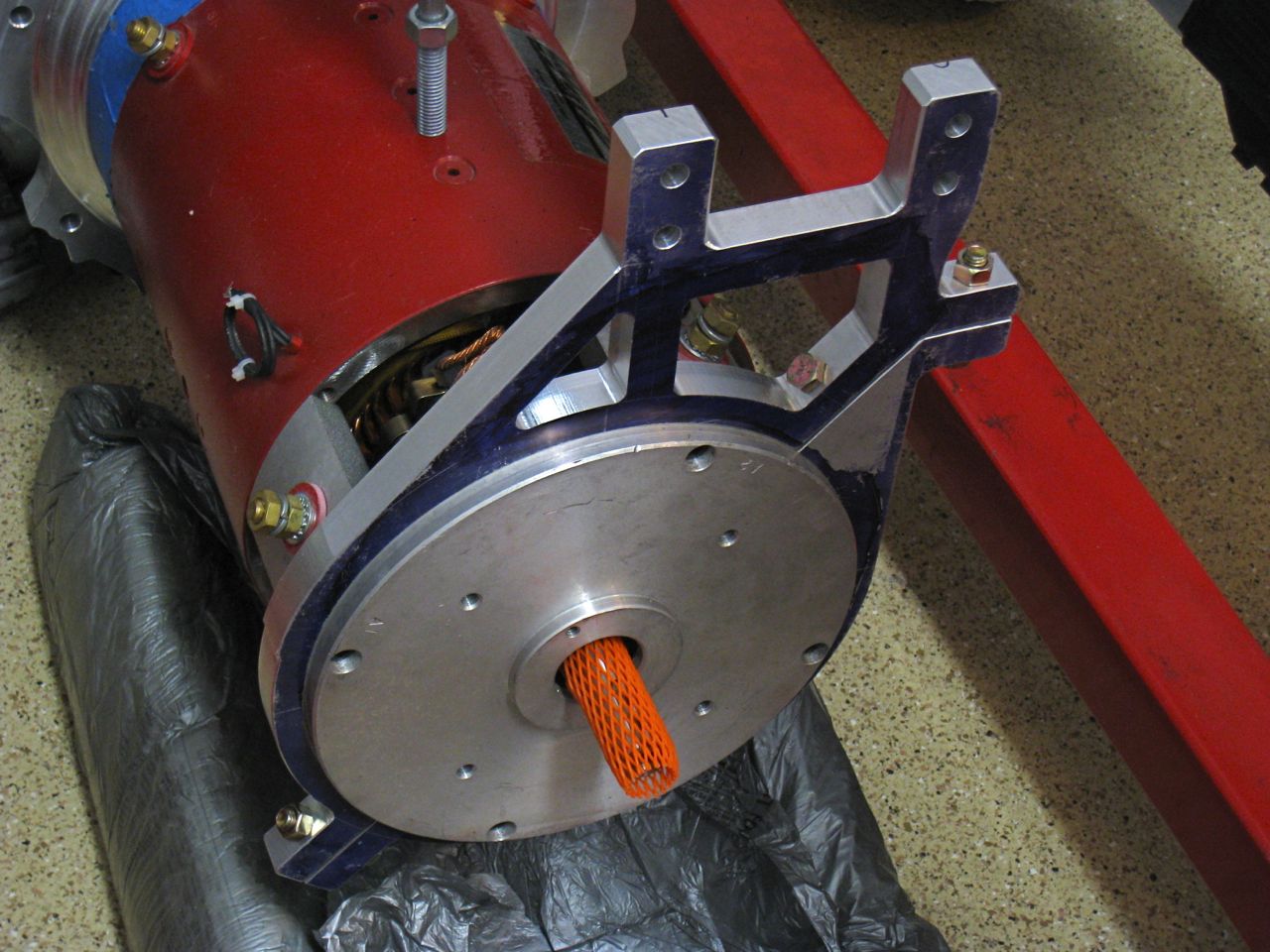
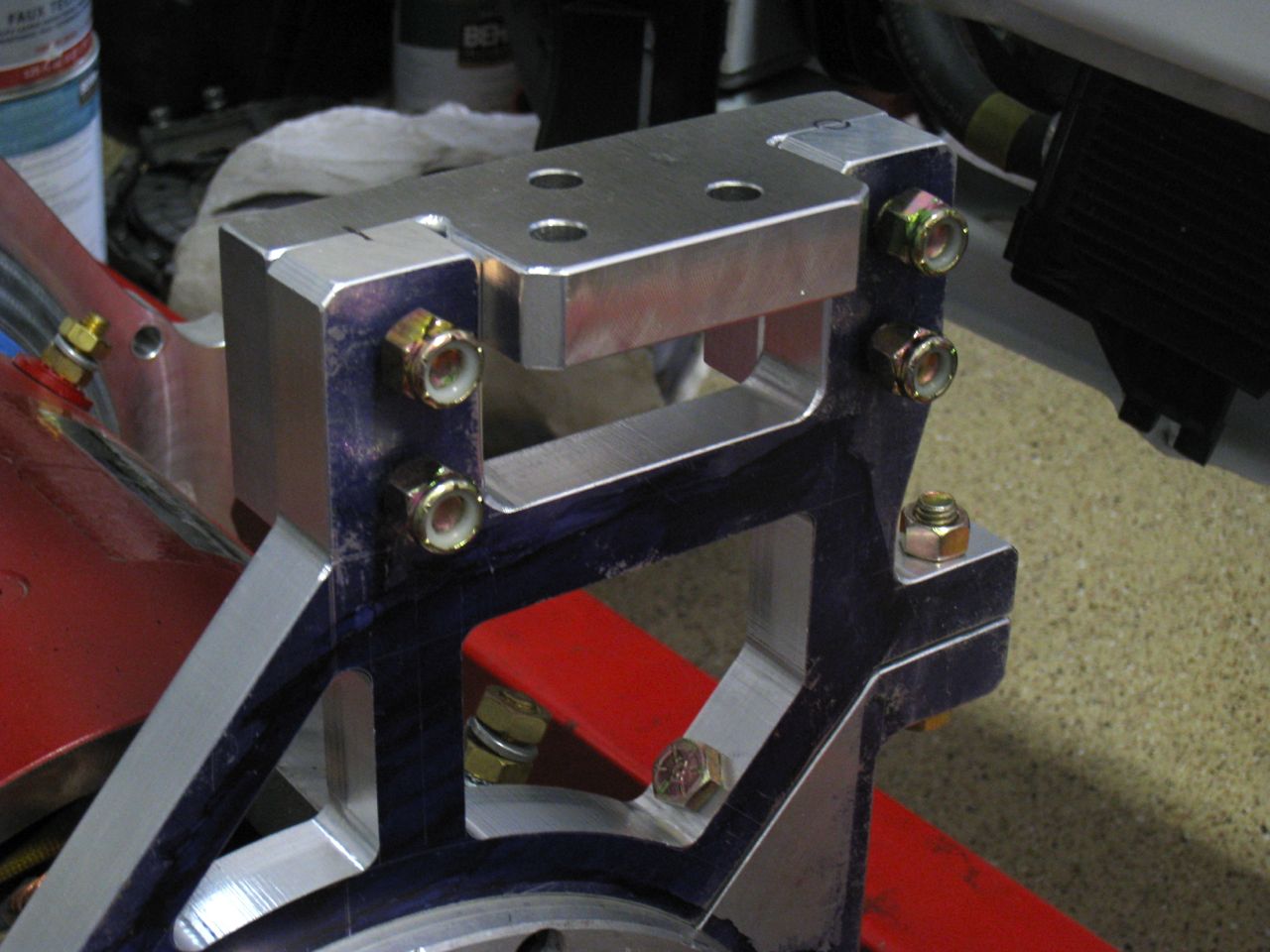 Above you can see the third piece of the aft-mount equation. This part mates the upper half of the cradle with the OEM passenger-side motor mount already in the car. The three holes are used to bolt this entire assembly to that mount and take advantage of the original soft mount design that supported the gas engine.
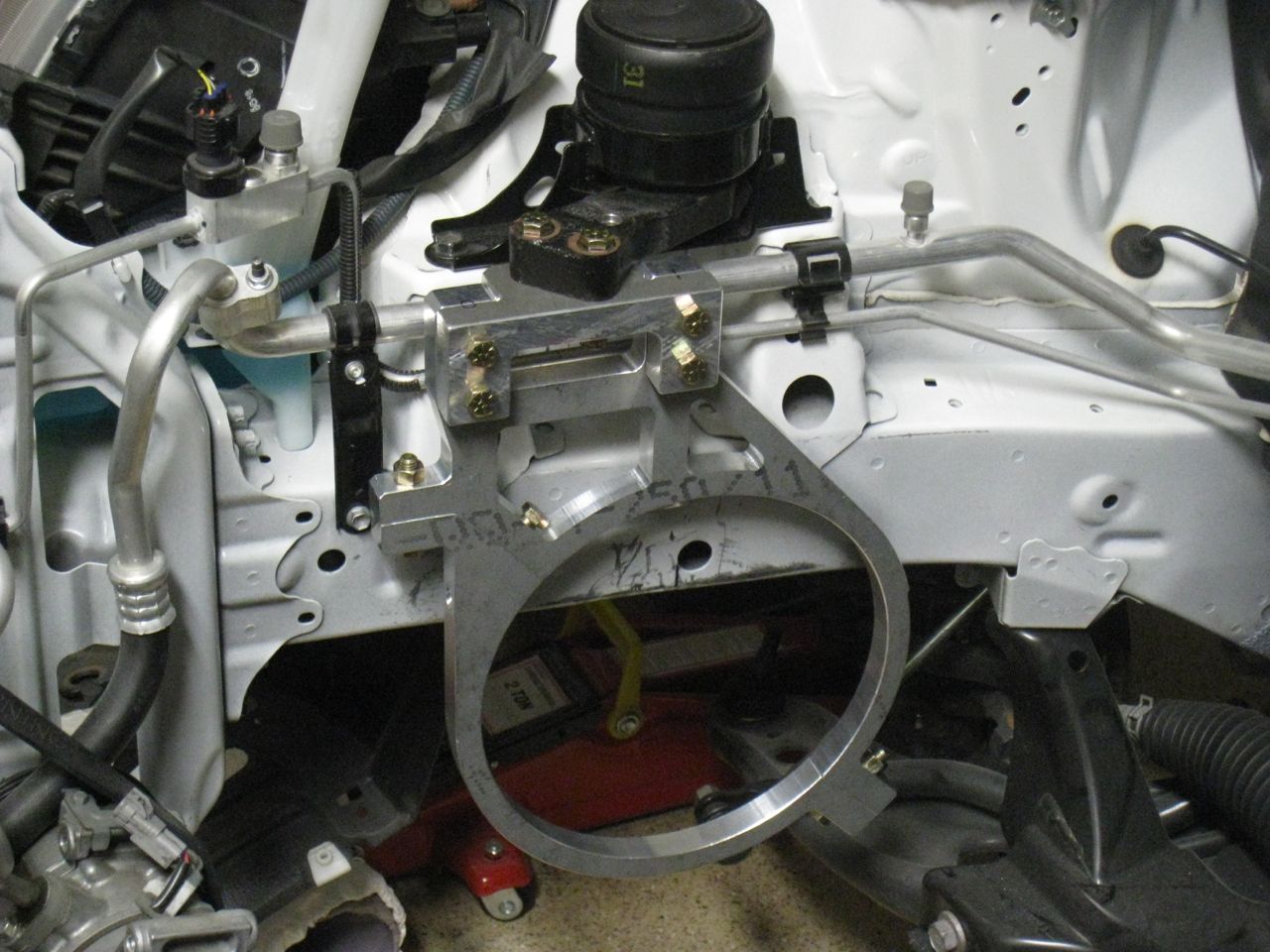 Lastly, here's a look at the mount in the car (without the motor in it). I quickly and loosely bolted everything up one last time just to confirm alignment and fit. It looks like we're in business.
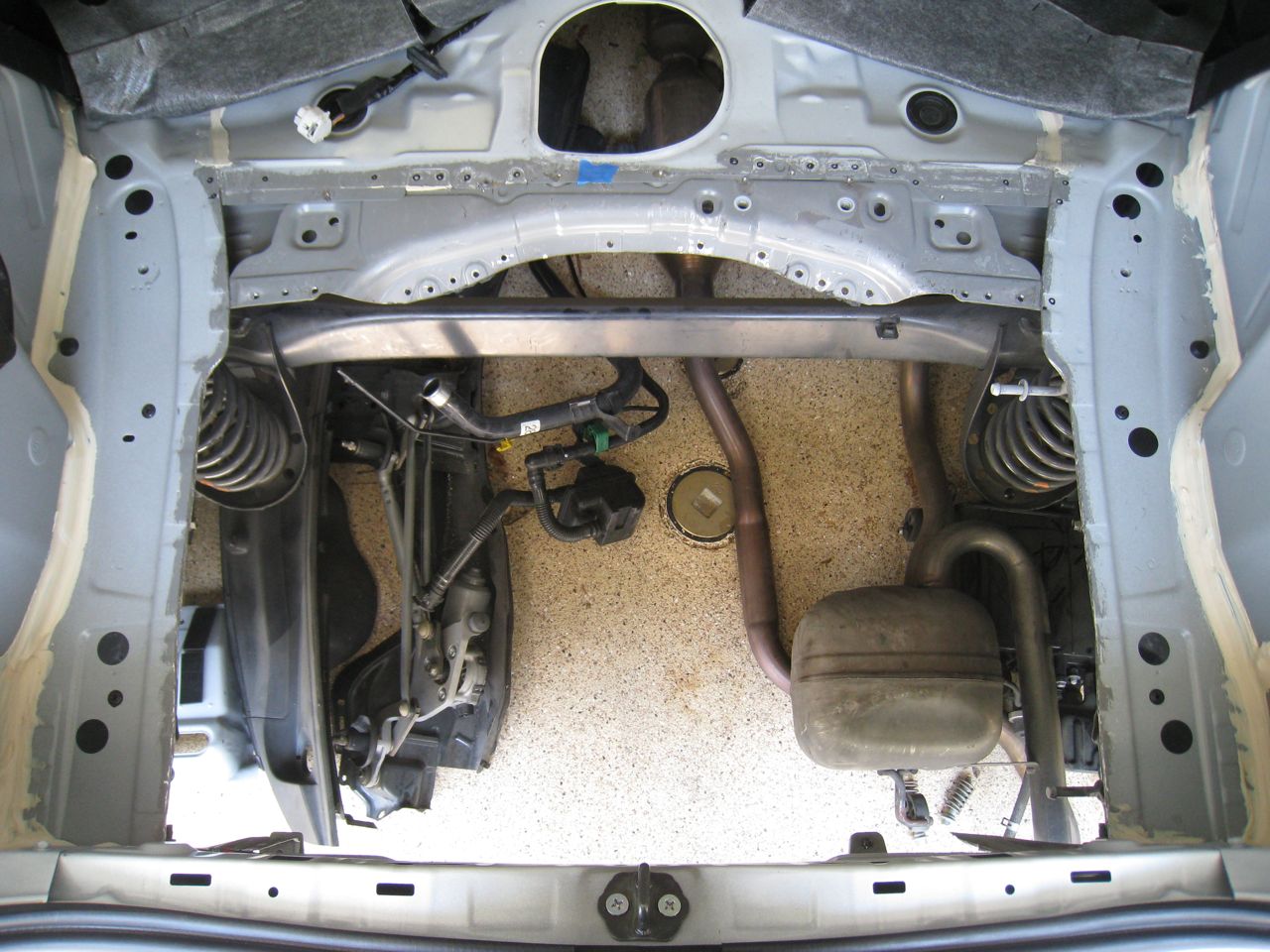
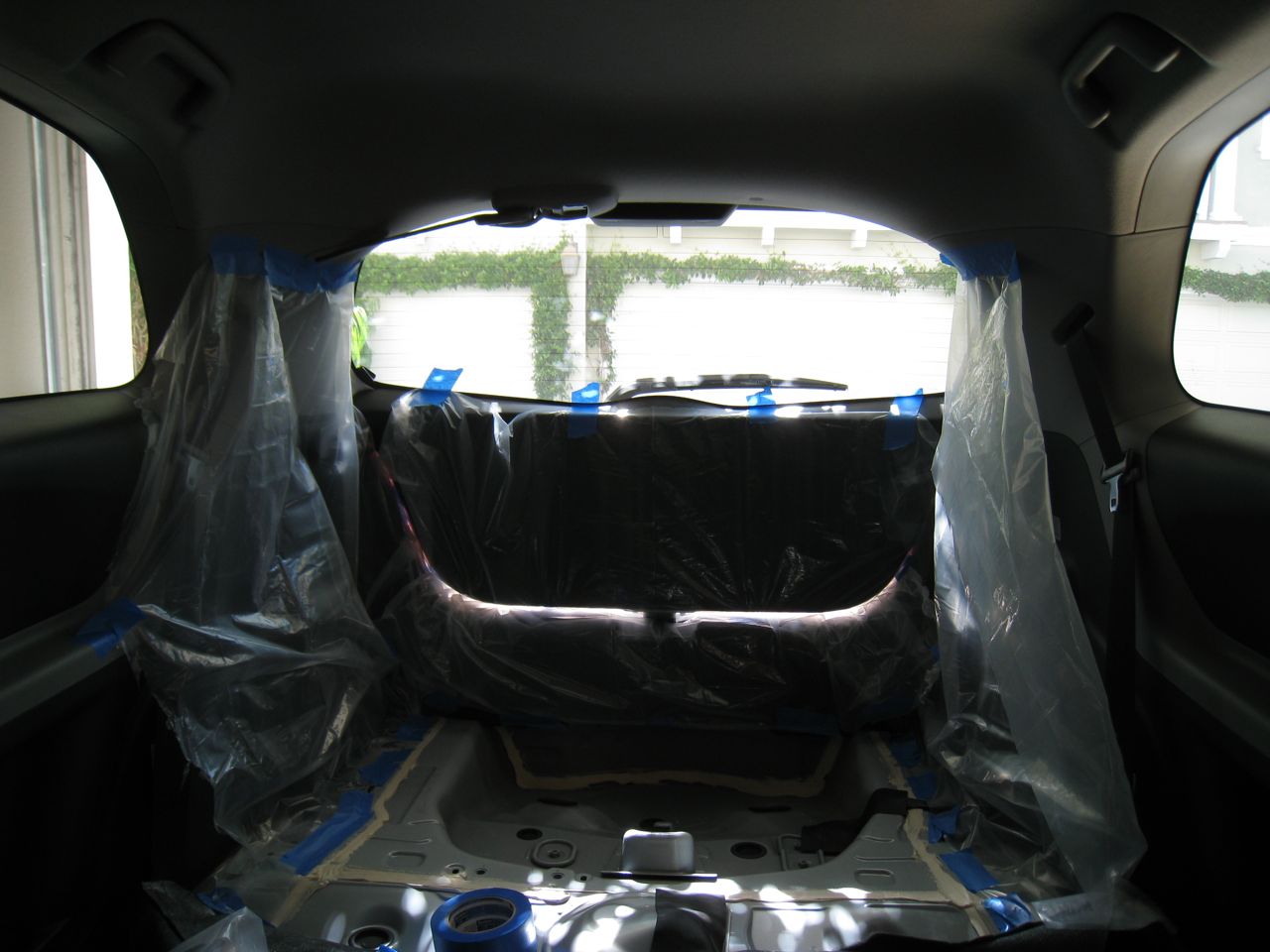
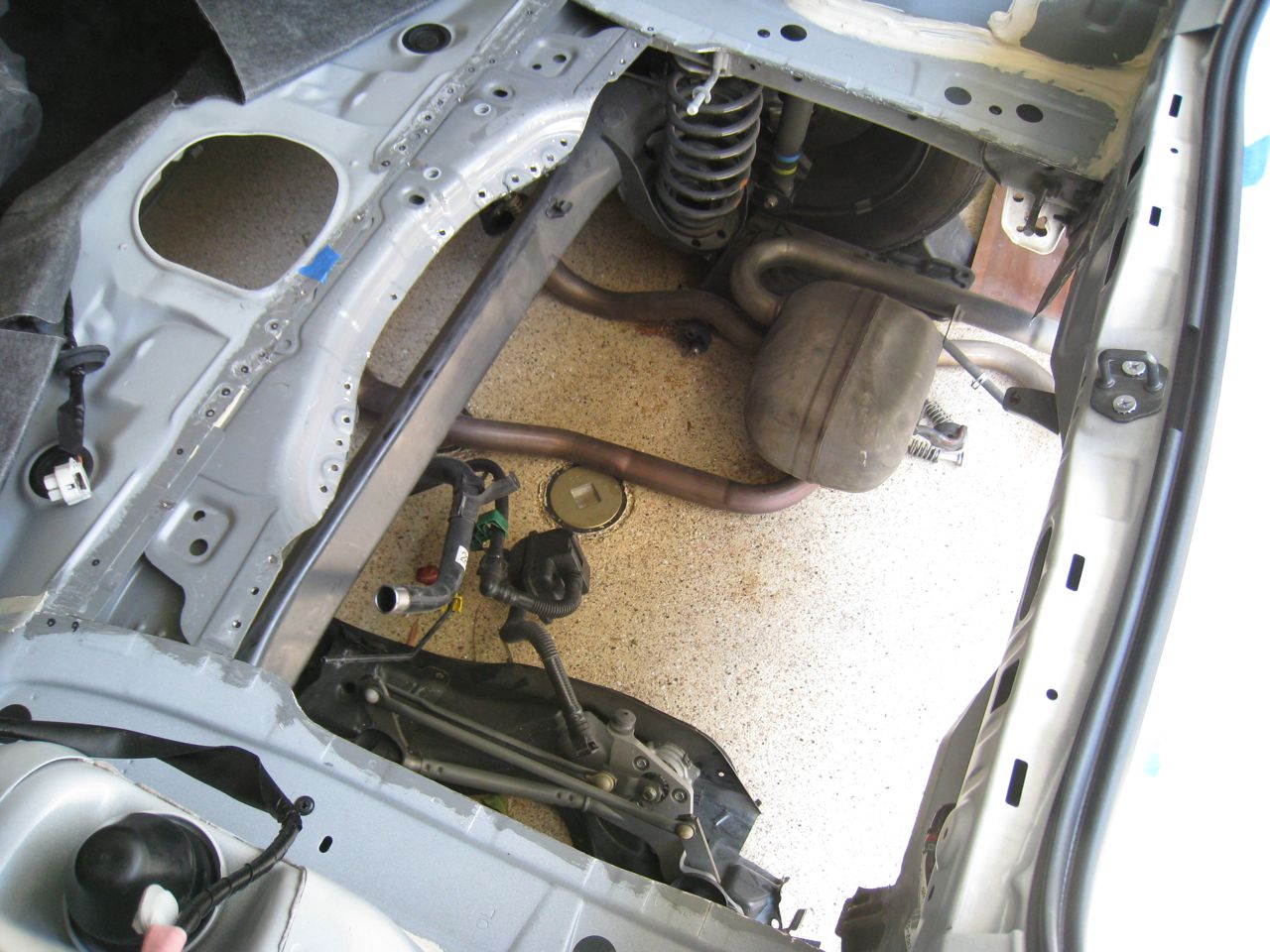 Going back a bit, here's how things went down. I had to remove some more interior plastic panels from the trunk area to get better clearance on the sides and rear bumper end for more cutting.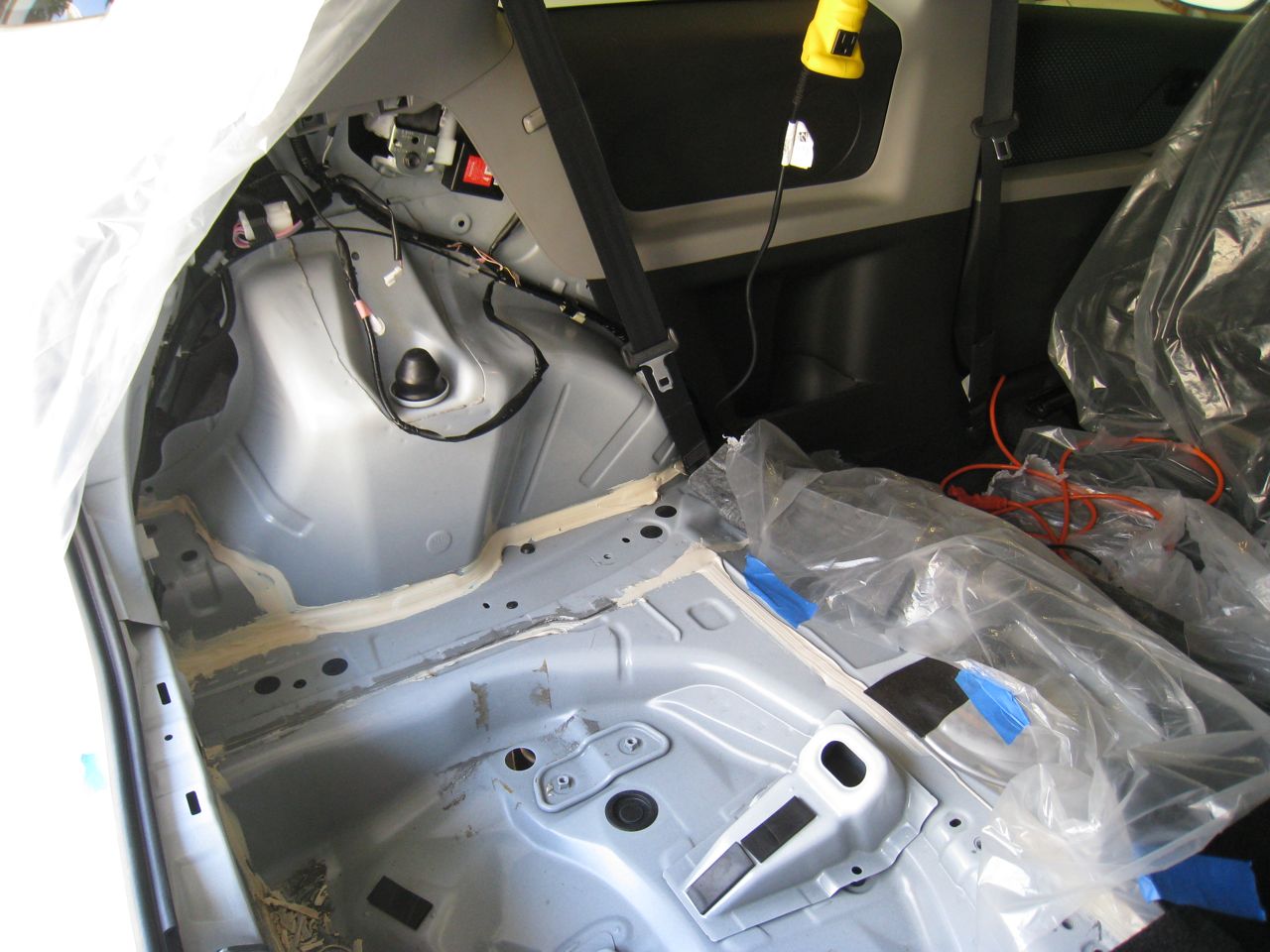
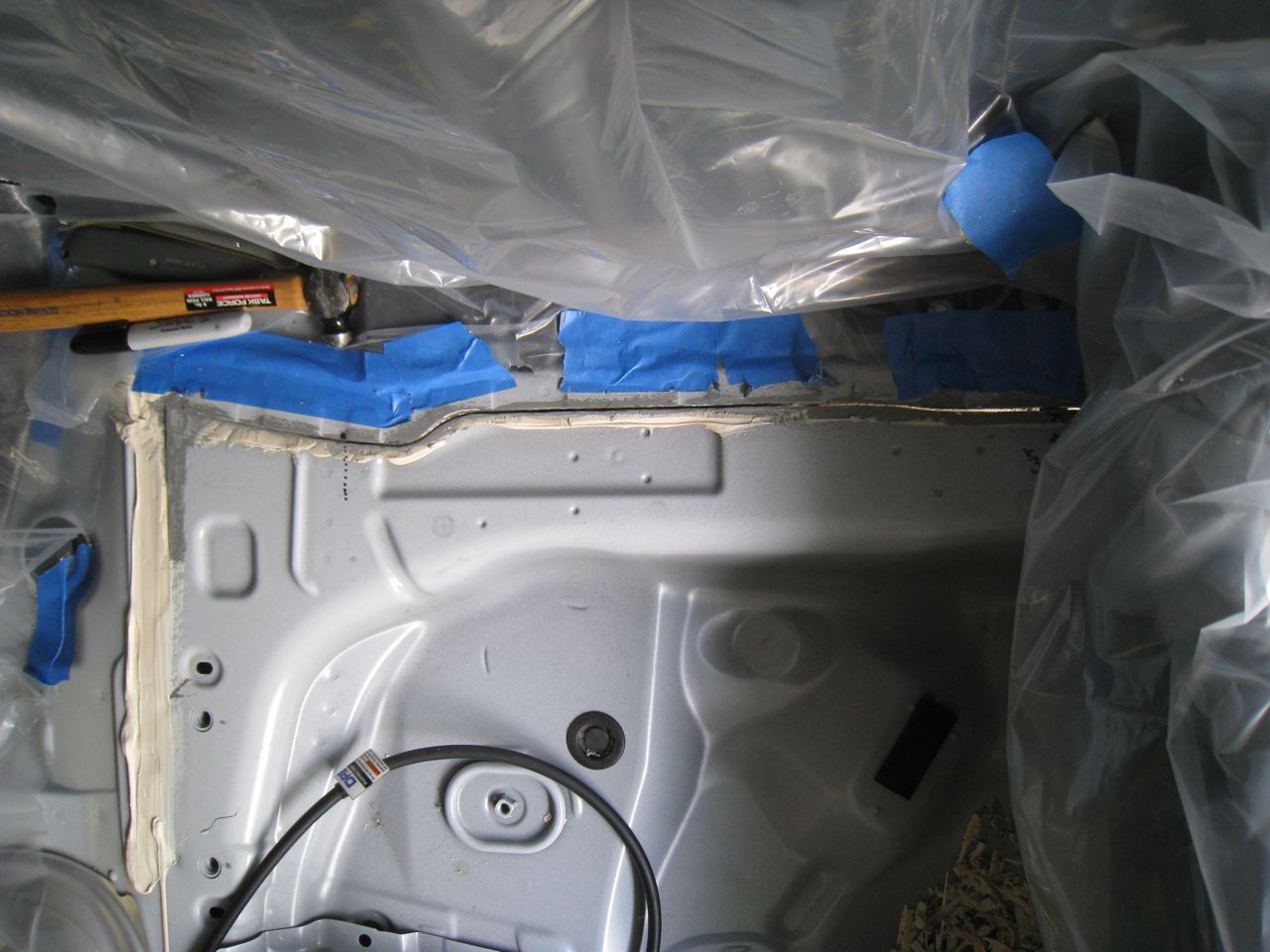
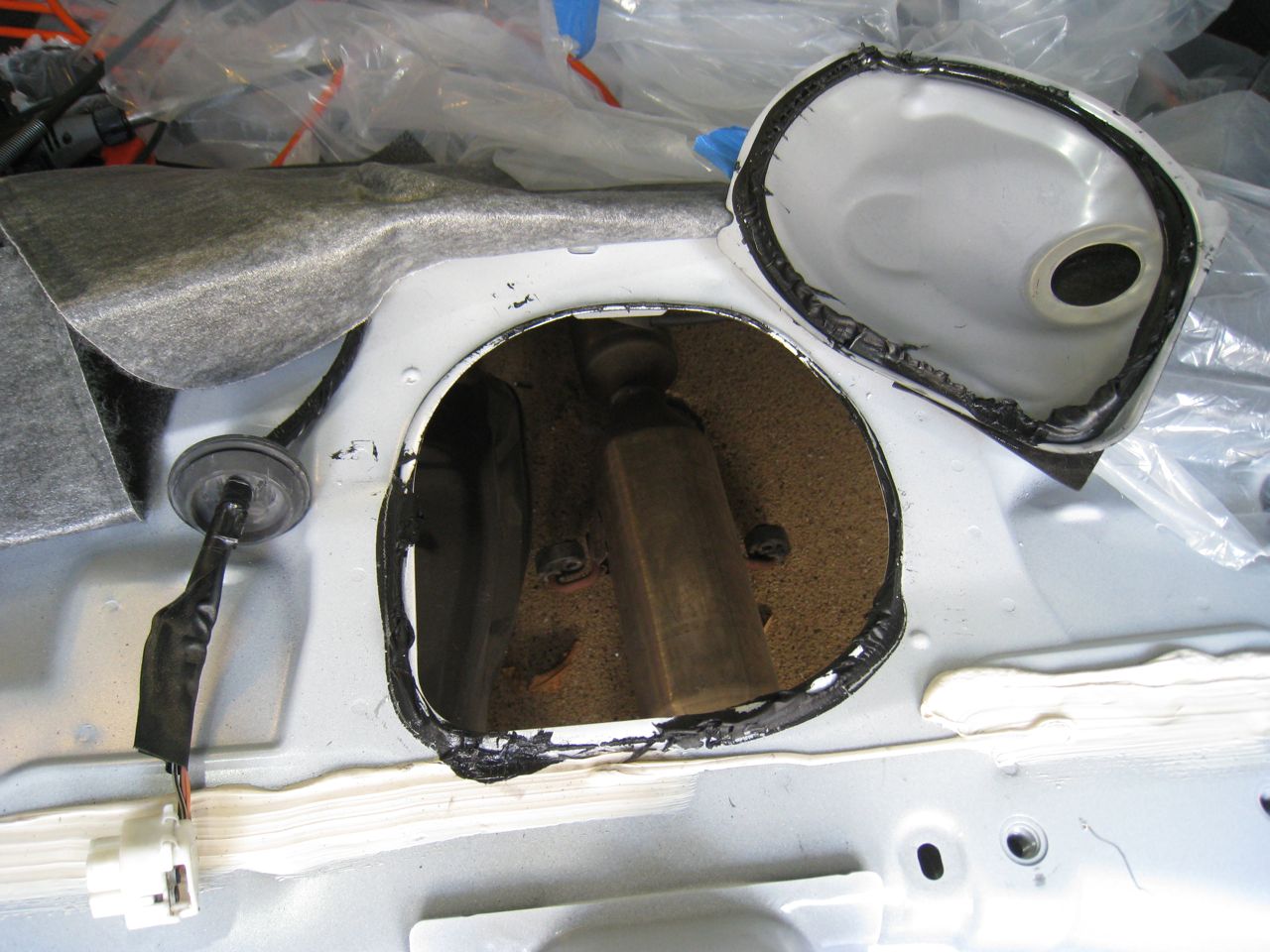
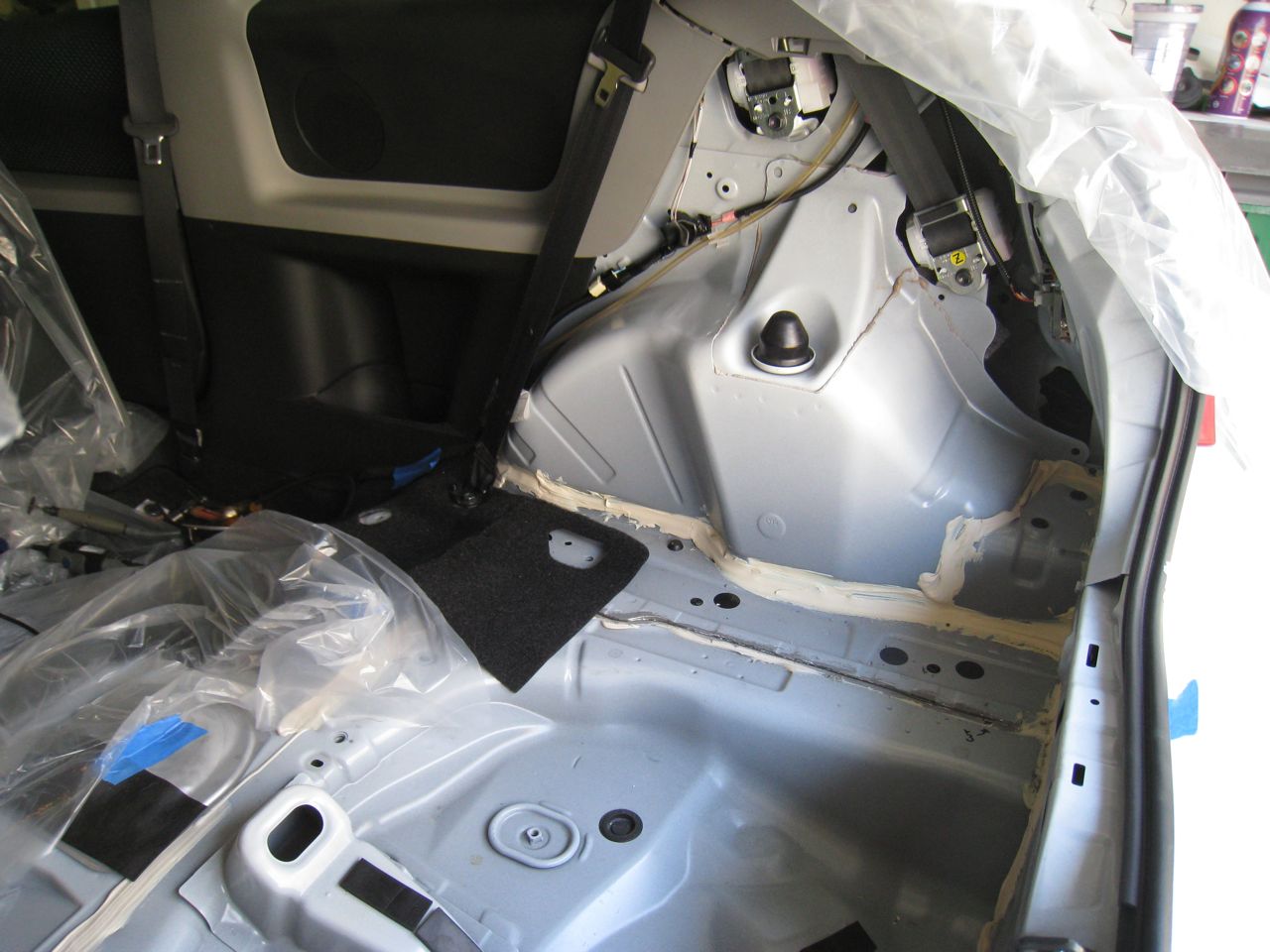 I removed this small stamped metal cap that used to sit over the gas tank. It was held in place with some type of sealant that never dries out so I had to use a solvent to clean it up.
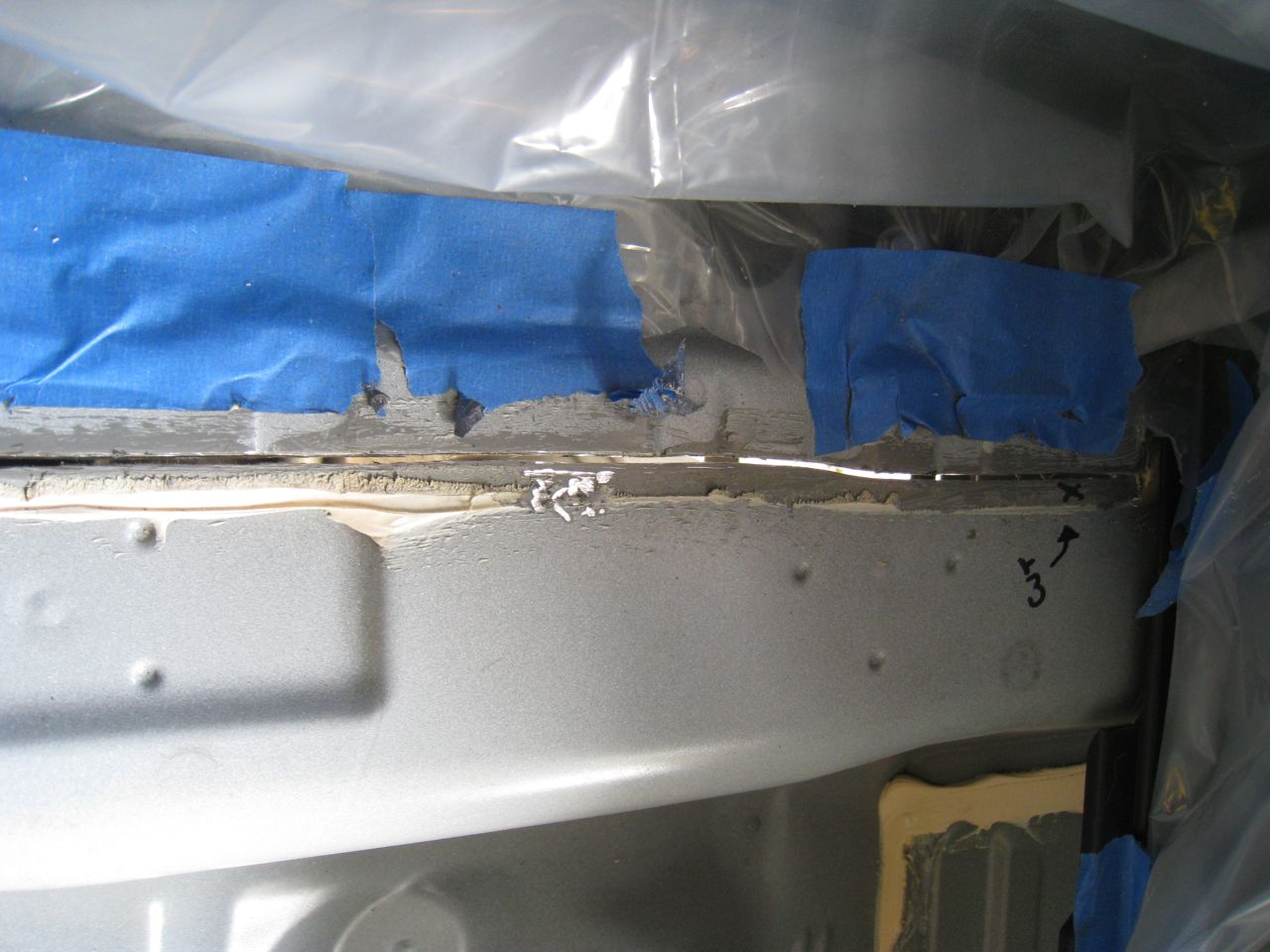
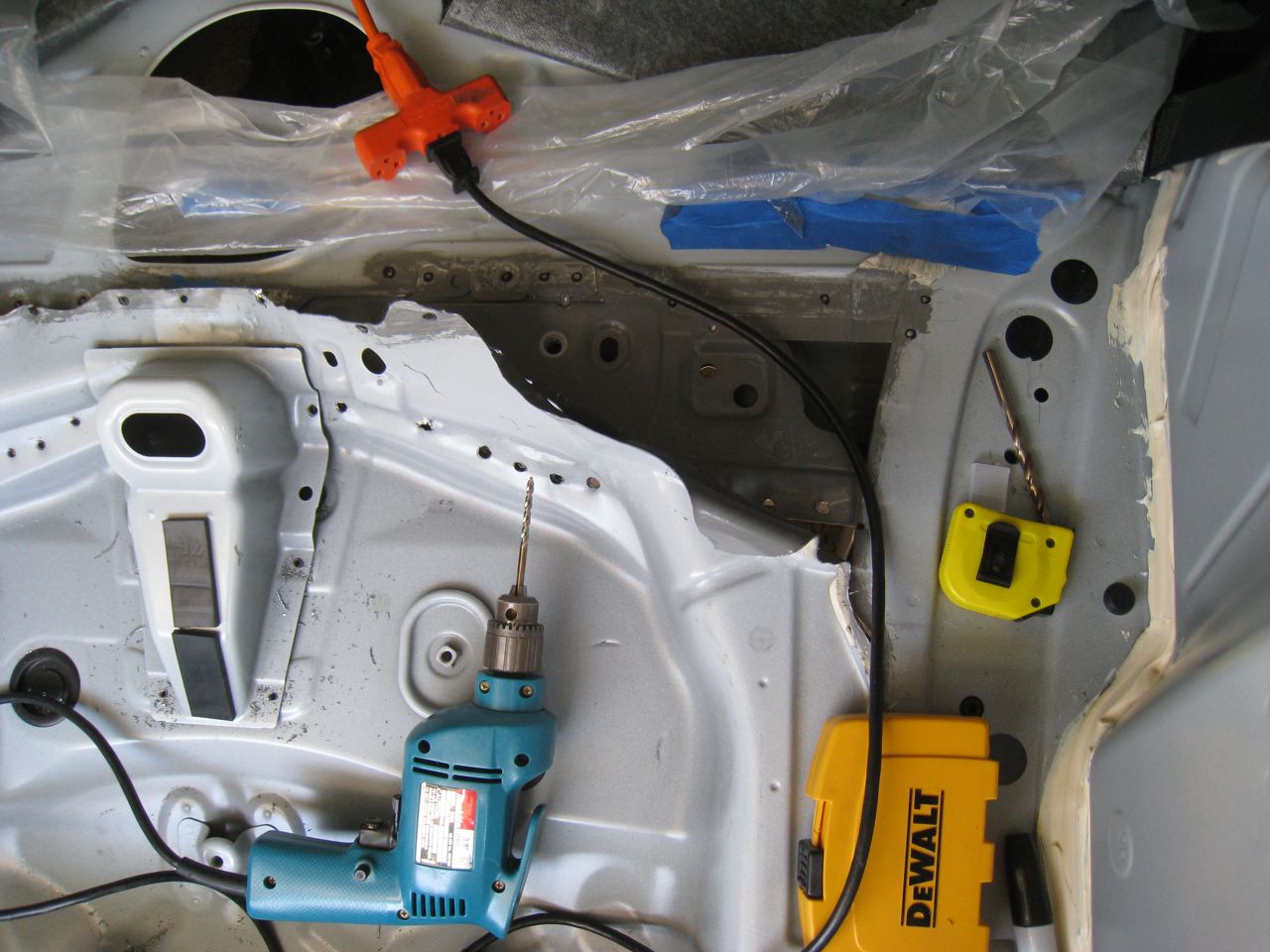
 As I started to work along the edge that is closest to the front of the car, it became very clear that I could not simply cut through the metal without damaging the structural frame that crosses the rear of the car. So, I decided to start drilling out the spot welds so that I could pry the metal apart. I used a metal punch and hammer to create a center point for drilling, then used a 1/8" bit followed by my Unibit to enlarge the holes until the welds were gone. I had to use a chisel and hammer to separate some of the difficult welds that weren't completely removed by the drilling pass. Here's a shot of the carnage in progress:
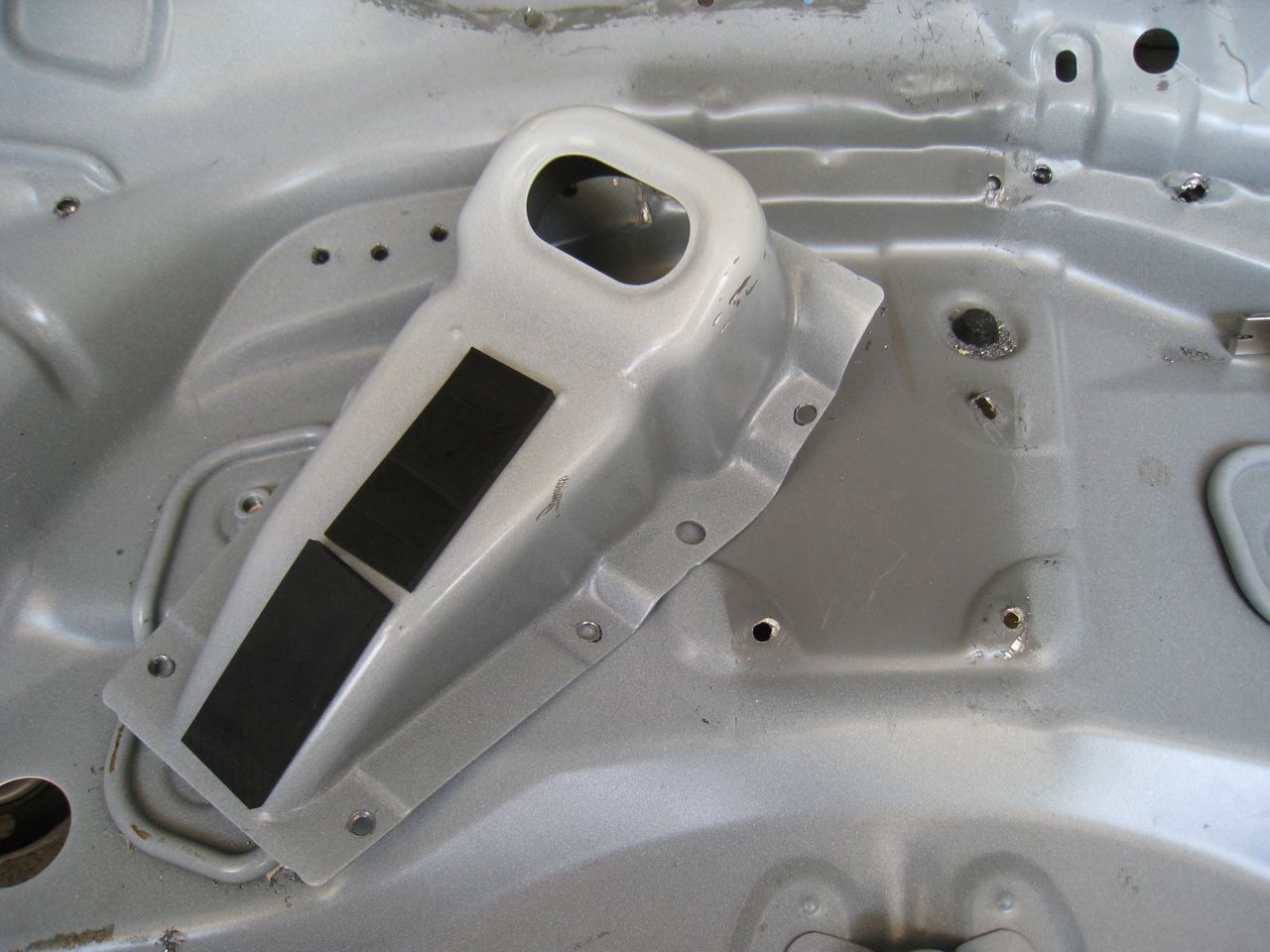
 There was a single weld hidden under the spare tire mount that prevented me from freeing the front end of the well. In the end, I had to remove this part just to gain access to that last spot weld. Below is a photo of the mount once it came off.
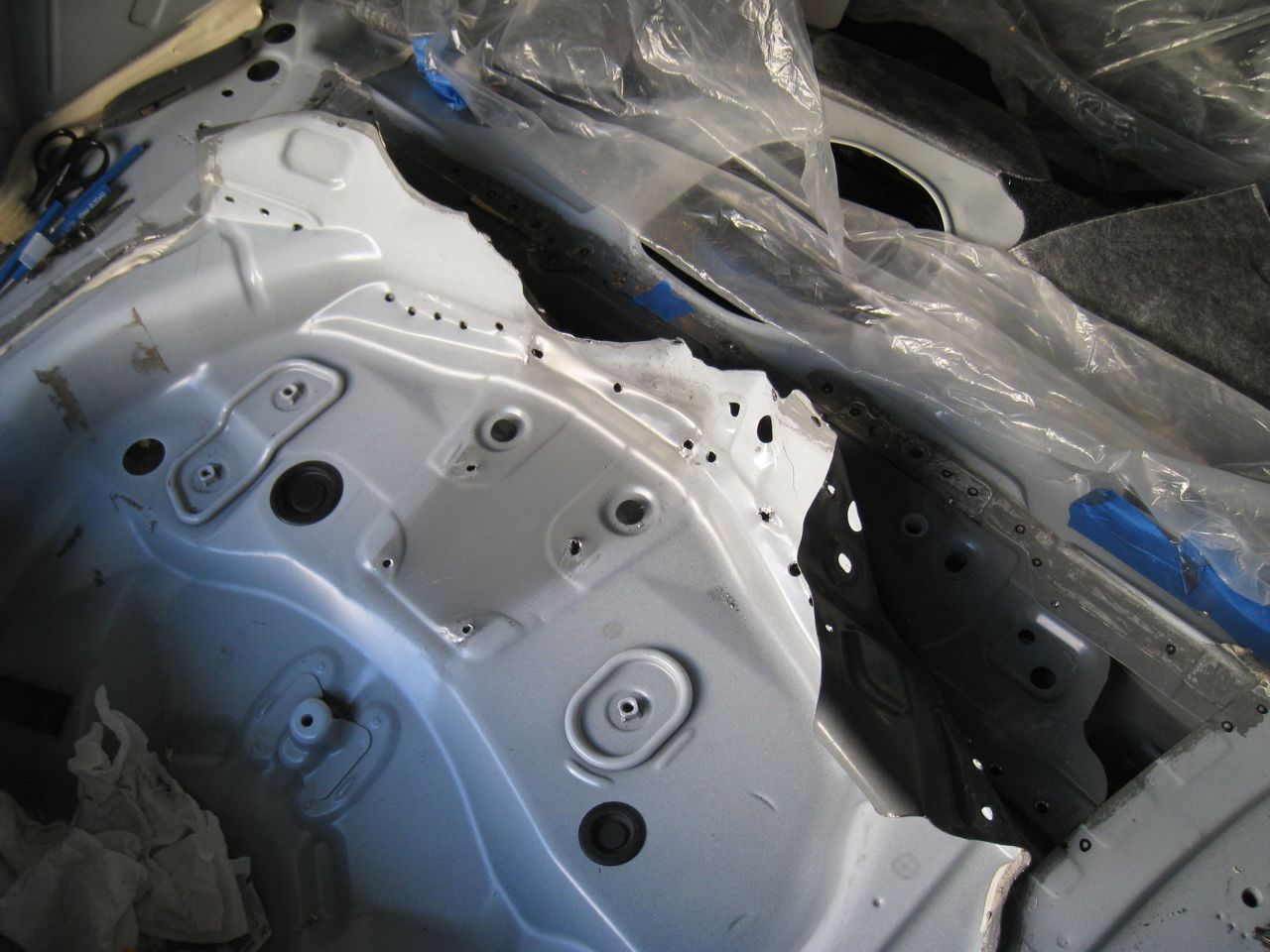
 Several hours were spent working along this edge and the result is this crazy looking mess of metal. The panel was free on three sides at this point and all I needed to do was cut along the rear bumper side to finish the job.
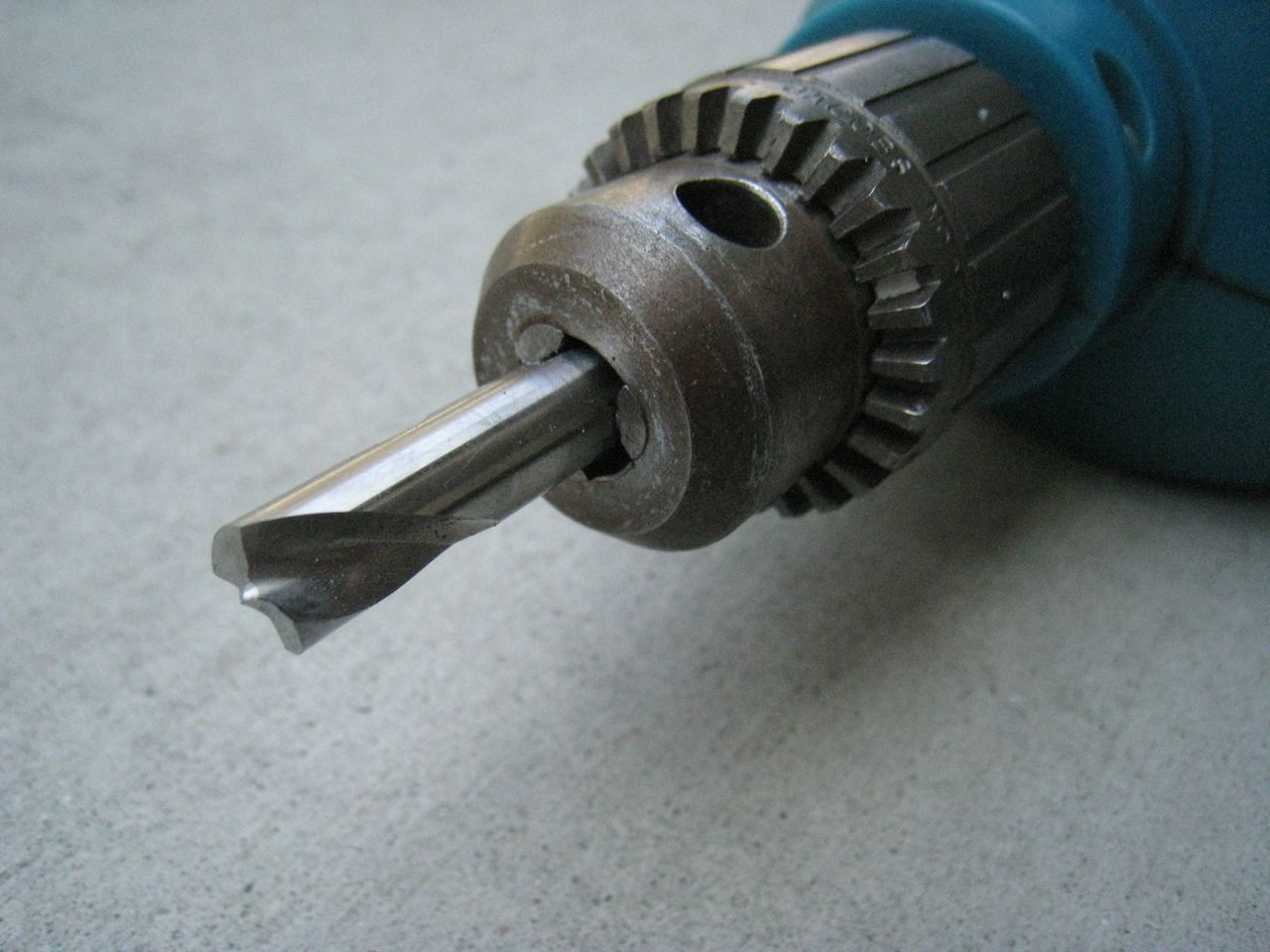
 Removing spot welds was such a tedious process that I looked around for a better tool to do the job. I ended up ordering a spot weld removal bit from amazon.com that is designed for this kind of work. It's 8mm and has a flat profile with a small point in the center. It cuts much more like an end mill cutter than a drill bit. I plan to remove more of the body work where the rear passenger seats were so this bit should make things easier:
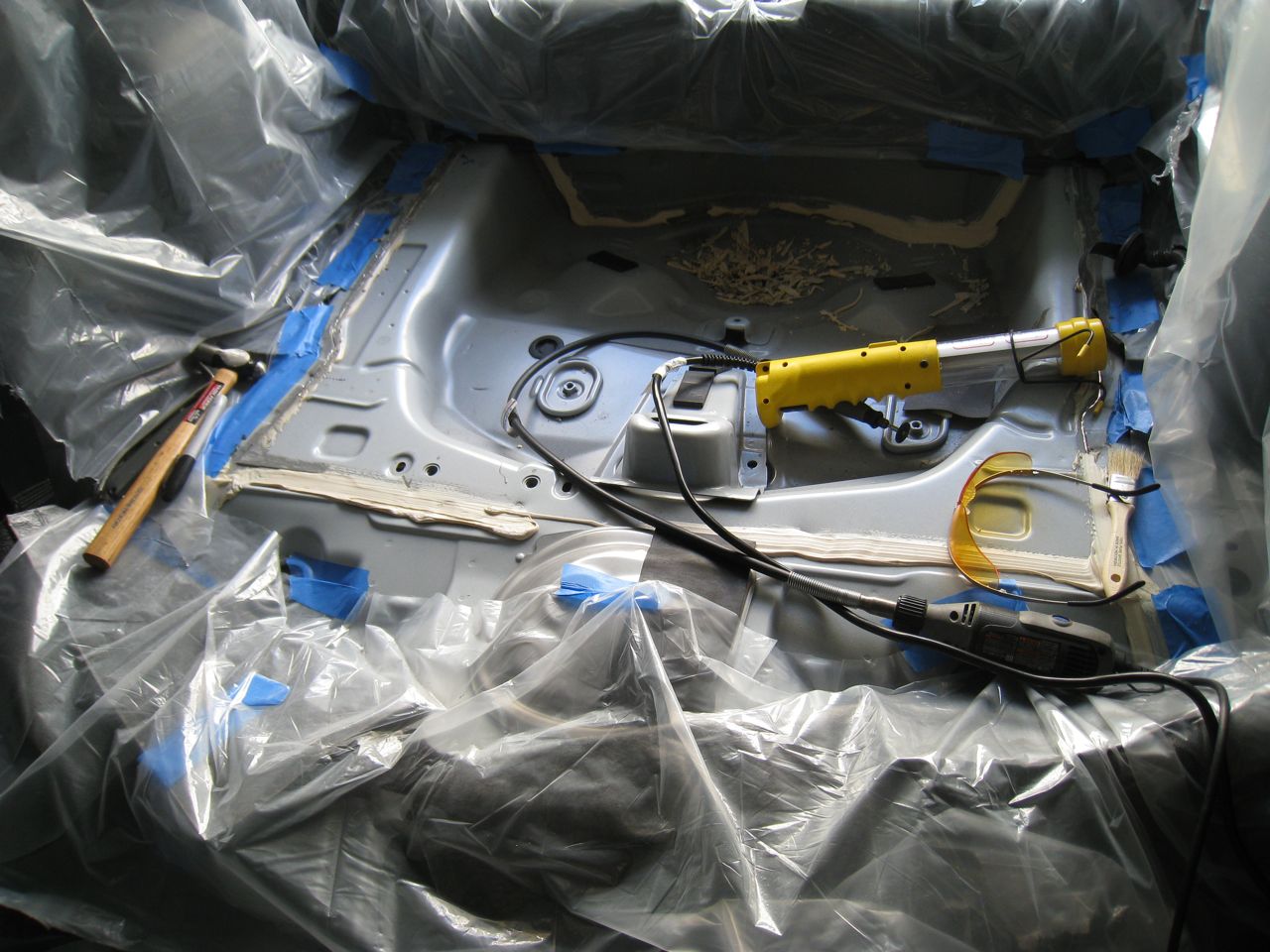
 Finally, here is a photo of the sheet metal body panel once I got it out of the car. I mangled it pretty good in the process. Knowing you're not going to put it back certainly gives you some freedom.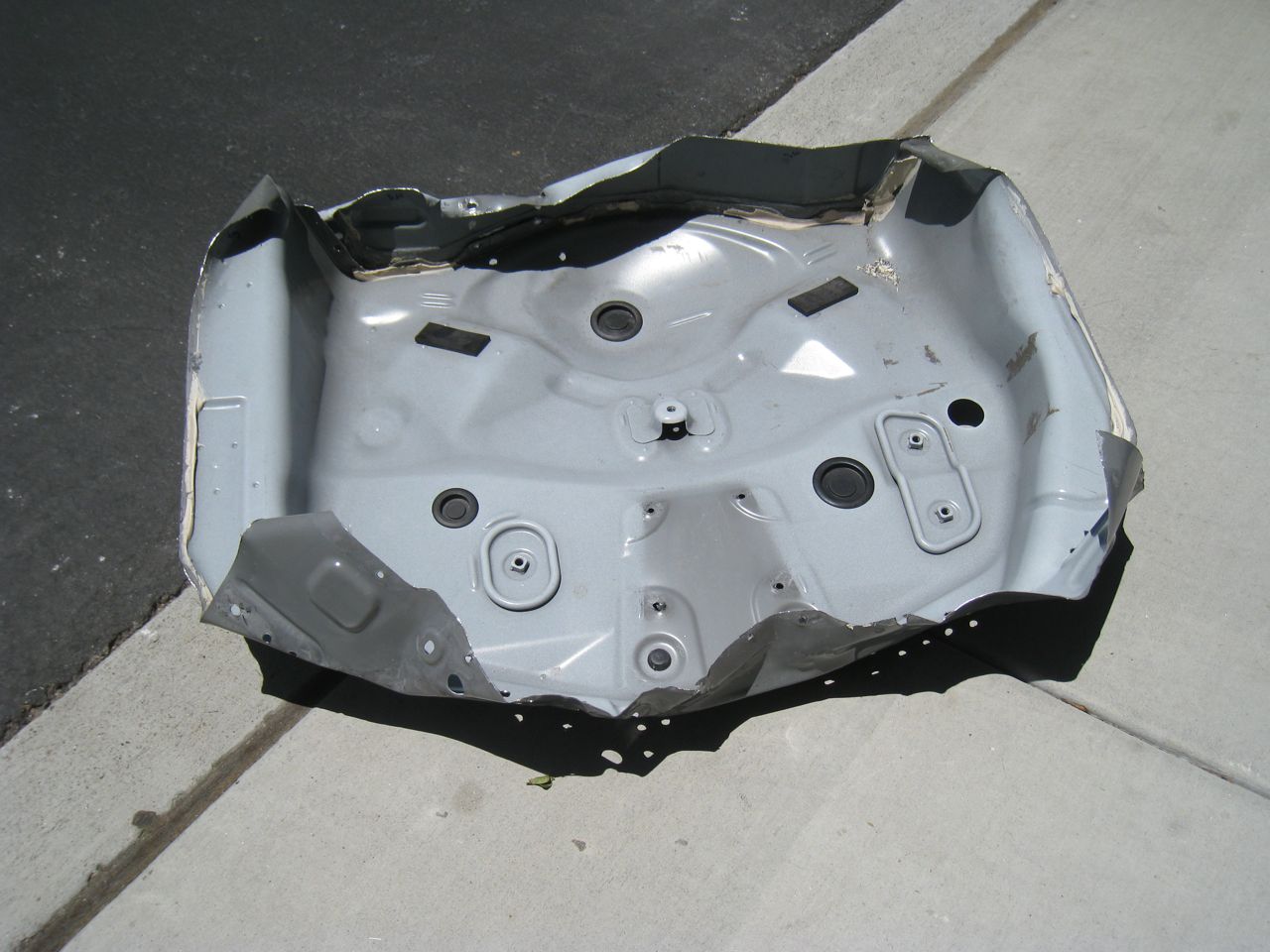
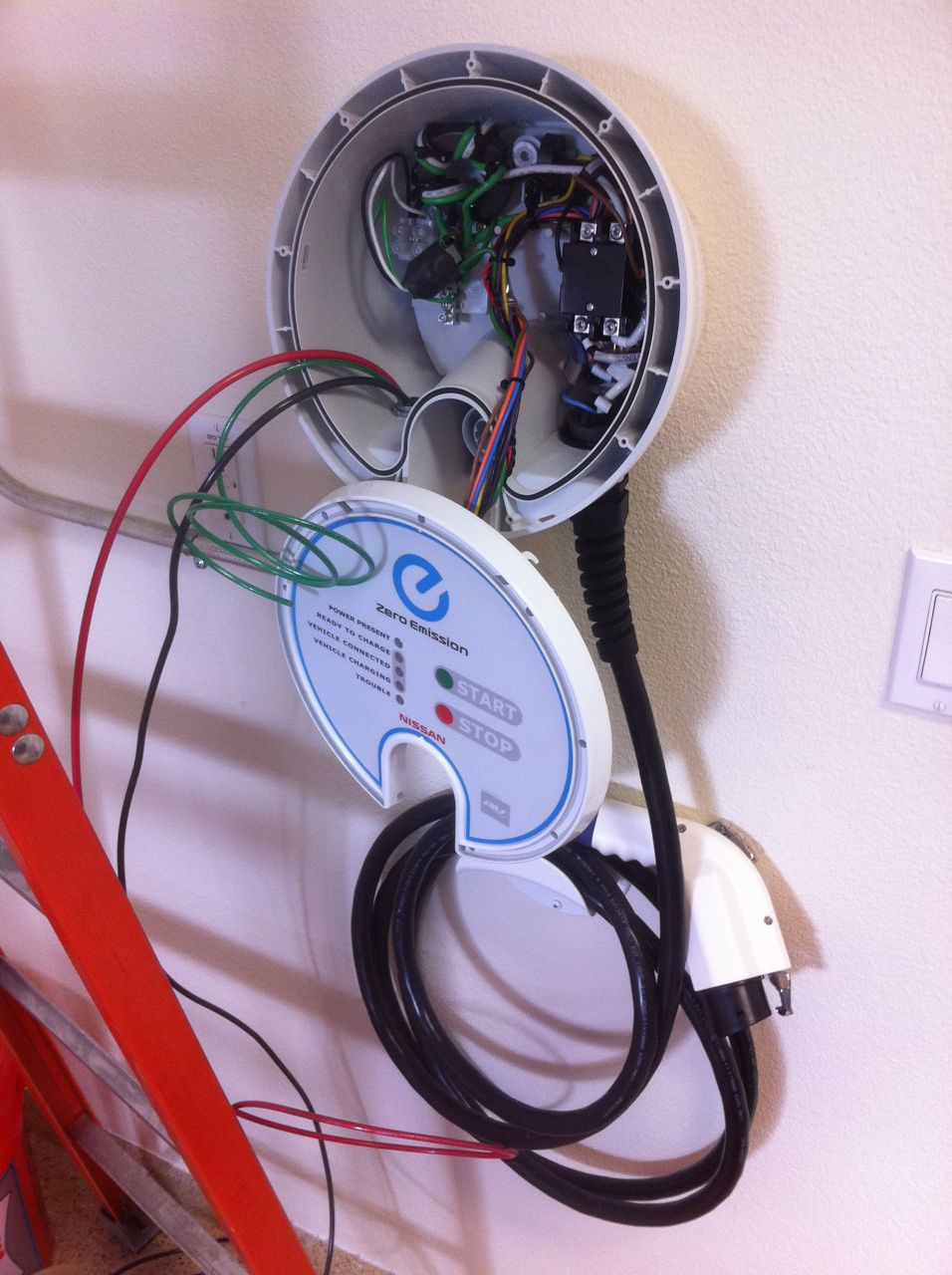
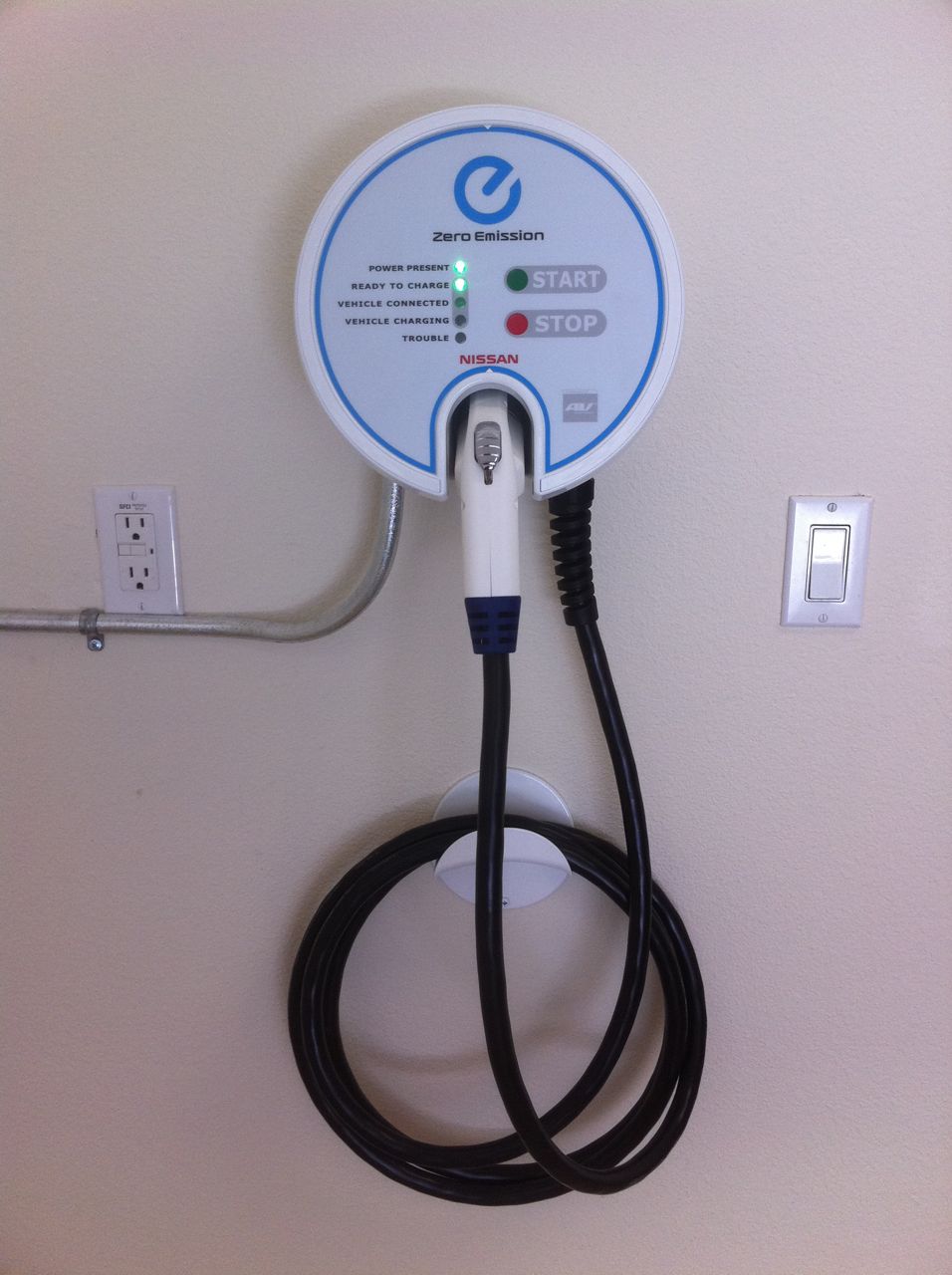 I took the photo below while the unit was still open and not yet wired so that you can see some of the inner workings. Like an EV, it has a contactor inside that is open until it receives a signal from the J-1772 plug telling it to close and energize the wire and charge the car. This signal is sent from the car via the proximity pin on the J-1772. It looks like this safety feature will require me to investigate a unit for my Yaris that can duplicate this signal so that I can take advantage of charging stations with the J-1772 plug such as my garage.