Monday, August 3, 2009

Fabrication: Adapter Plate (part II)

I know it's been a while, but here's a quick update. I helped my father put together a "serious-hobbyist" machine shop in his garage. He has a lot of projects he wants to work on in the future and has volunteered to help me machine parts for my electric car project. So, he's got some industrial grade tools now. The mill in particular is really something.
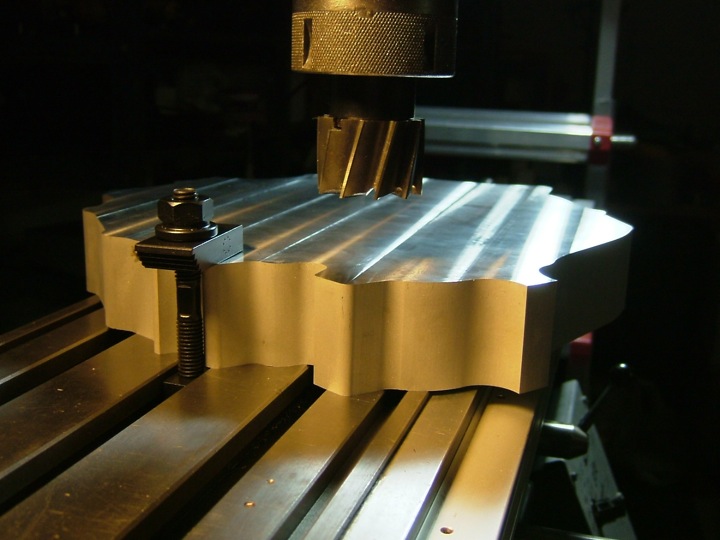
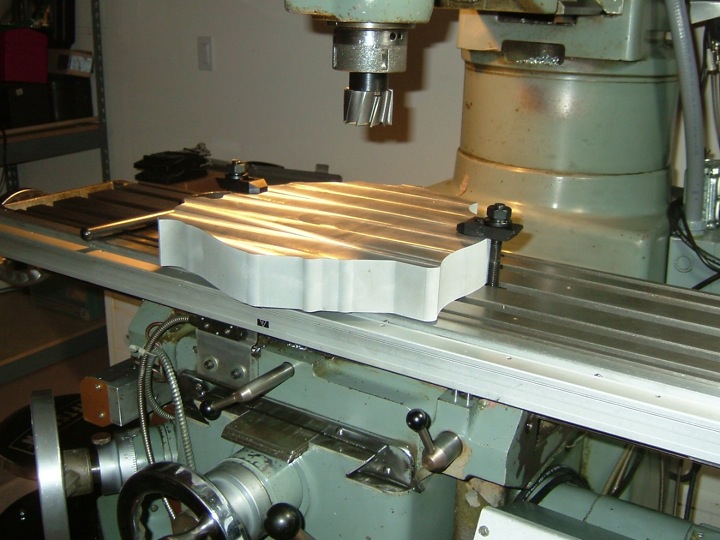
Above is a photo of the mill with the adapter plate clamped to it. Before drilling holes or machining features into the adapter plate, it was faced to consistent thickness of exactly 2 inches. There are minor variations in the raw plate that would throw the final adapter alignment off if not machined true. The plate is now ready for the bolt holes to be drilled. More on that soon!

Sunday, May 10, 2009

Fabrication: Adapter Plate (part I)

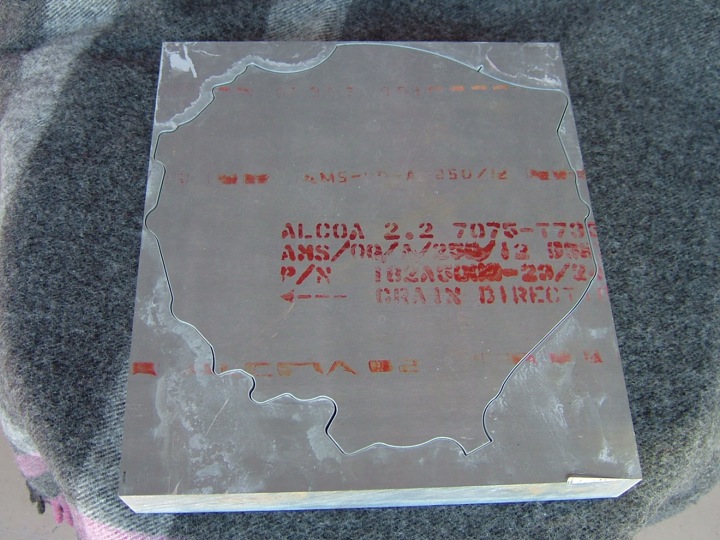
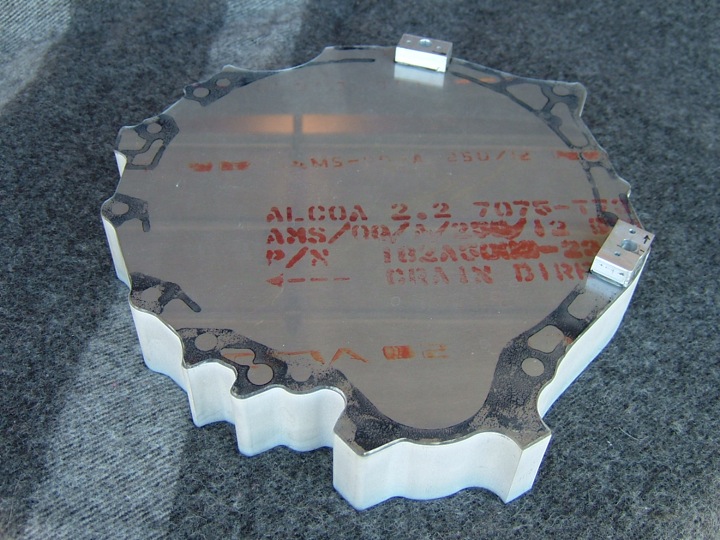
Here's a photo of the aluminum plate after the adapter outline has been machined. The plexiglass template was traced by computer and that data was used to drive a water jet to cut through the thick plate.
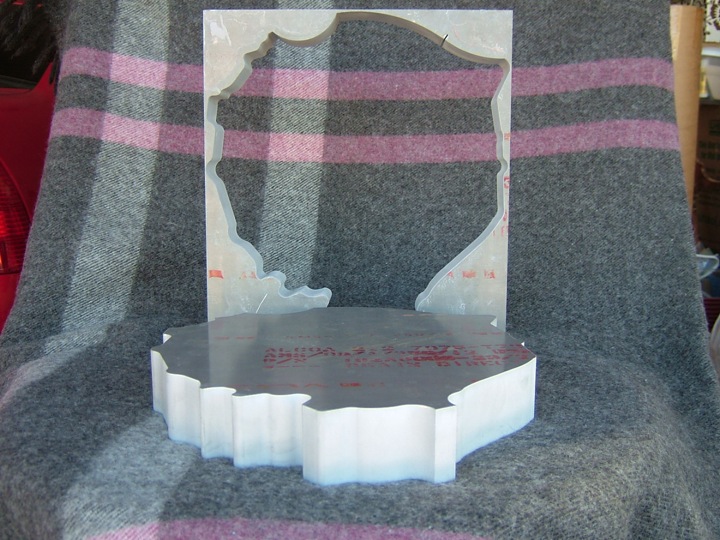
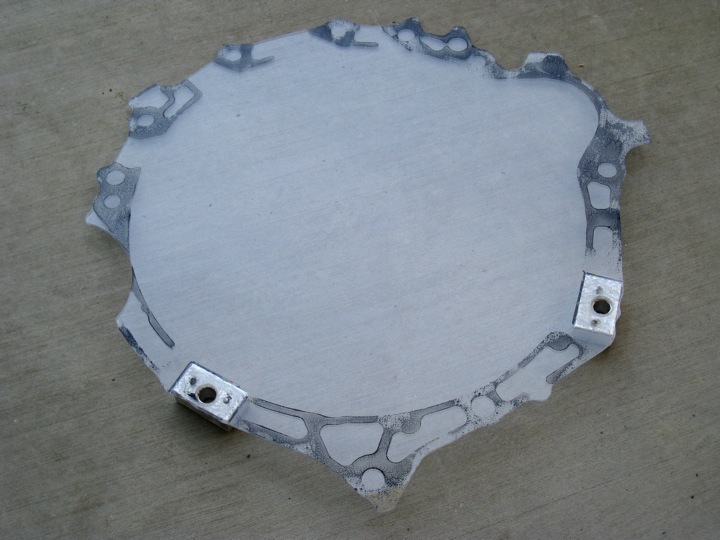
With the part removed from the excess aluminum, you can see the sand blasted finish on the edge from the water jet process. I also really like this photo because of the perfect negative of the template left in the original aluminum plate. How cool is that?
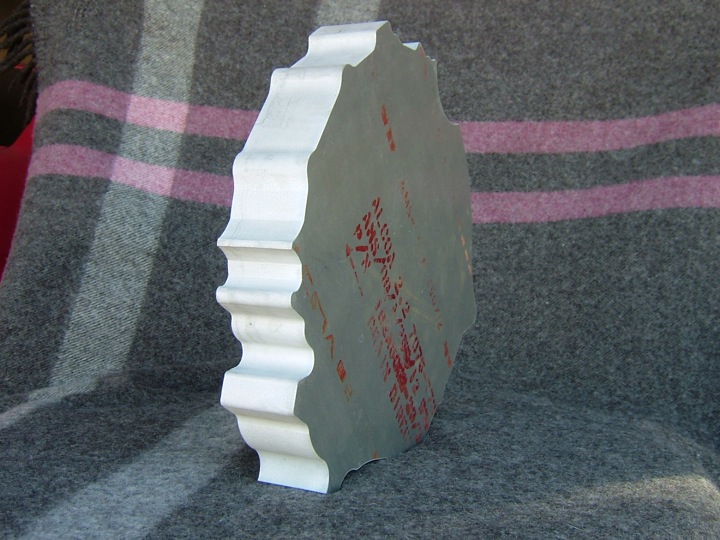
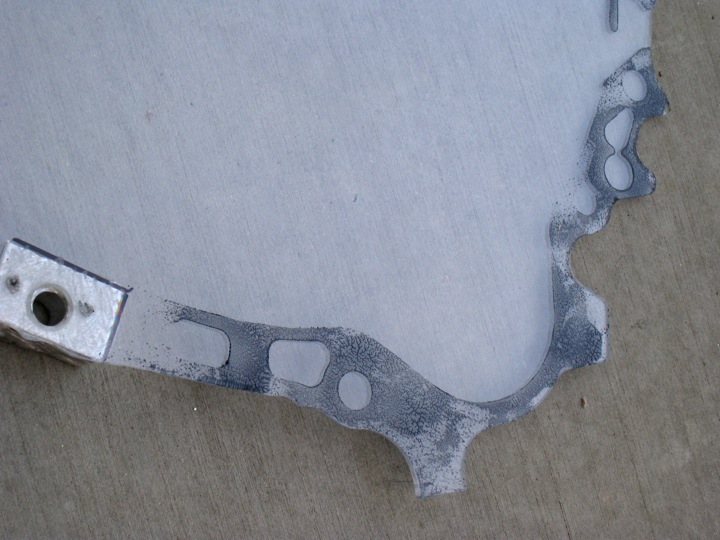
This photo below really shows how well the profile of the transmission bell housing has been replicated. You can also get a sense of how thick the plate still is. A significant amount of material can be removed near the edges (to reduce weight).
This last photo shows the plexiglass template laid on top of the adapter plate. The template is still necessary to machine several of the adapters features. It allows the 10mm alignment pin holes to be drilled accurately, center can be found from those pin holes using measurements taken earlier, and the bolt holes needed to secure the adapter plate to the transmission flange can be located. So far, so good.

Monday, April 20, 2009

Tools for precision

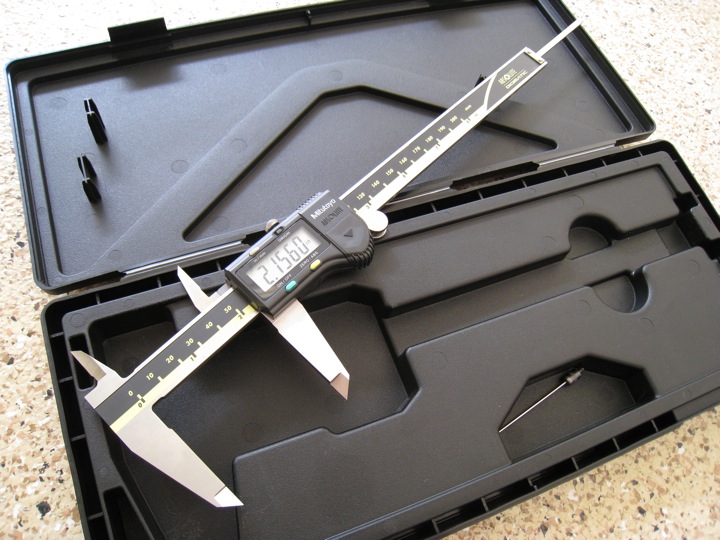
I mailed the adapter template to my father and ordered a piece of aluminum plate (15" x 23.6" x 2.2") to be delivered to his address. He's helping me out by machining the adapter. While that's going on, I thought I would post a photo of an important tool for acquiring accurate measurements .
This is an 8" digital caliper made by Mitutoyo. With it, distances, diameters, widths, drops, etc. can all be measured with precision (if used properly). This tool was instrumental in creating the template for the adapter.

Saturday, April 4, 2009

The adapter template

Here is the finished adapter template:
In order to accurately find center for the adapter plate, we intend to use measurements taken from the 10mm locating pins that align the engine block to the transmission. It's important that the location of the 10mm holes on the adapter plate be precise so that everything bolts up and the motor is centered to the input shaft. 

With the rough cut plexiglass template clamped to the transmission, larger than necessary holes were drilled over the location of the 10mm pin holes. Next, aluminum blocks were drilled to snugly slide over the alignment pins. With pins in the transmission, the aluminum blocks were slid over them and epoxied to the plexiglass. 2 small nails (with heads cut off) were also glued through the blocks and plexiglass to ensure the blocks would not shift making them 'bulletproof'.  I trimmed the plexiglass with a rotary tool to match the shape of the transmission bell housing exactly. The aluminum blocks align the template perfectly and ensure that this trimming pass results in a precise duplicate of the original flange.

Finally, I took a 'fingerprint' of the transmission flange. First, I removed the template. Next I coated the flange with some black acrylic paint using a paint roller. While the paint was still wet, I took the template, carefully lined it up to the pins, and slid it on, pressing it firmly against the flange. When I pulled it off, it created a great visual guide for machining the final aluminum adapter plate.

Sunday, March 29, 2009

Engineering

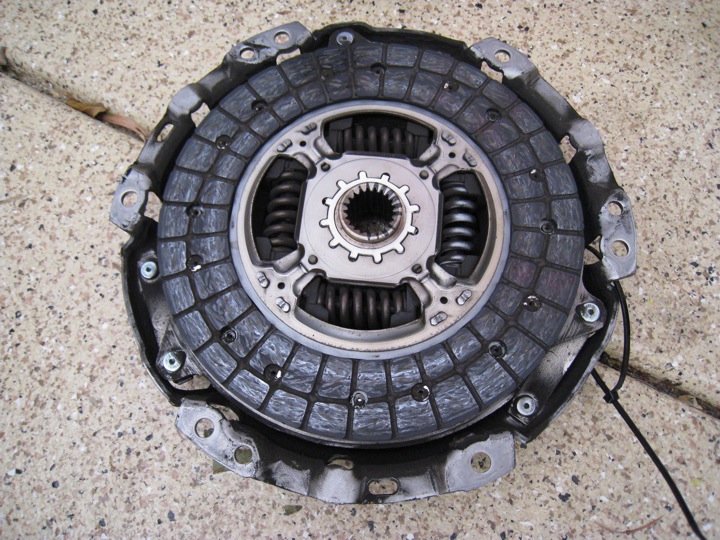
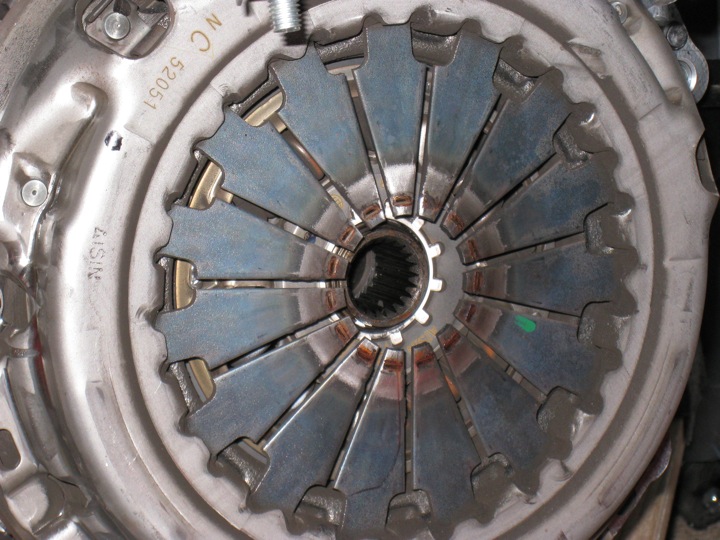
My father (who is an aerospace engineer) stopped by this weekend to help me with the key measurements and dimensions required to design an adapter plate and hub for mounting the Warp 9 electric motor to the flywheel/clutch and ultimately reconnecting it all so that it aligns and drives the transmission as the factory engine would (mechanically). First, we removed the clutch seen below:
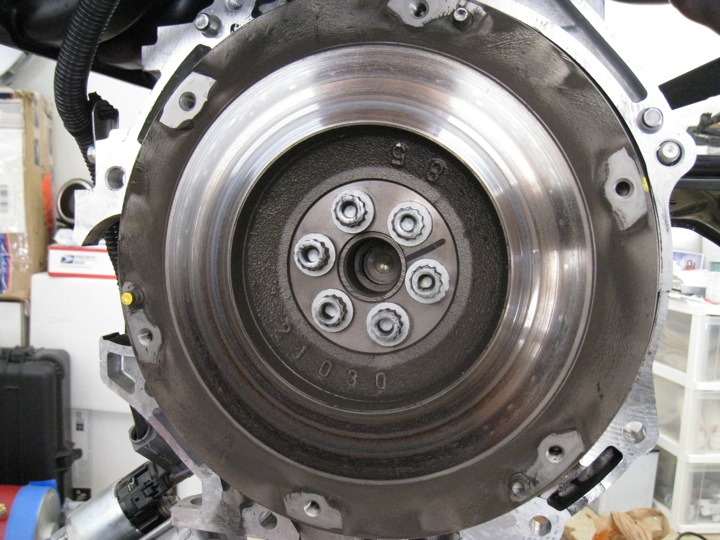
Below is a shot of the flywheel after removing the clutch assembly.
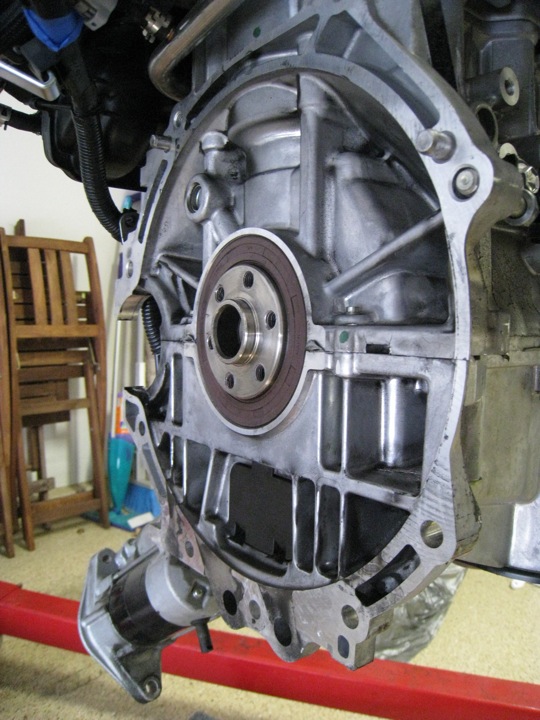
And here is what the block looks like with the flywheel removed. You can see the hub in the center (with 6 bolt holes) that will need to be duplicated in steel for the electric motor to mount to the original clutch and flywheel. The main difference being how it mounts the motor shaft via a slotted keyway. Important measurements focused on the relationship of features from the face of the engine flange to the hub along the axis of rotation. Many measurements were taken many times to ensure accuracy for later machining of the adapter parts.
In order to create the adapter plate, my father came up with a scheme to make a very accurate template/tracing of the transmission bell housing flange by trimming a piece of 1/8" plexiglass to match the profile. After a rough trim, we devised a scheme to get the 2 alignment pins represented on the template. This will ultimately allow us to find the center using a few measurements taken from the engine side pins to the center of the hub.
Here's the rough cut clamped to the transmission. What I really like about this idea is that it's rigid but thin material, the transparency makes it simple to se how things line up throughout the process of making it, and it's cheap. The next update will include more information about how this template was completed as well as photos of the finished template.

Sunday, March 22, 2009

Demolition: Engine and Transmission

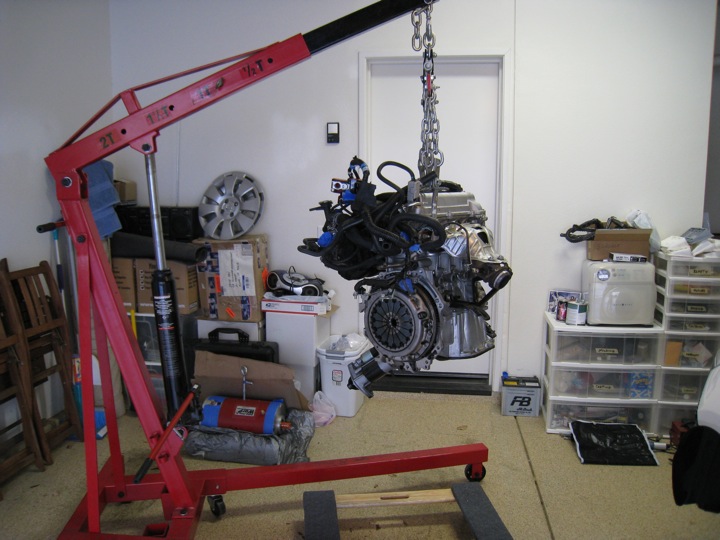
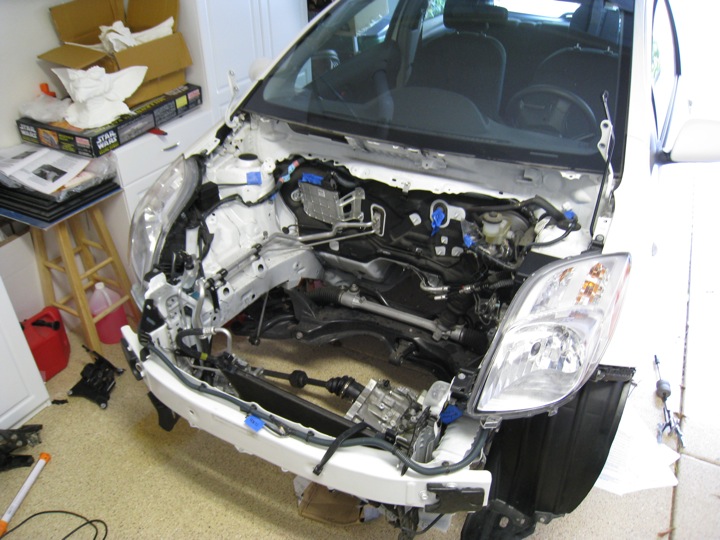
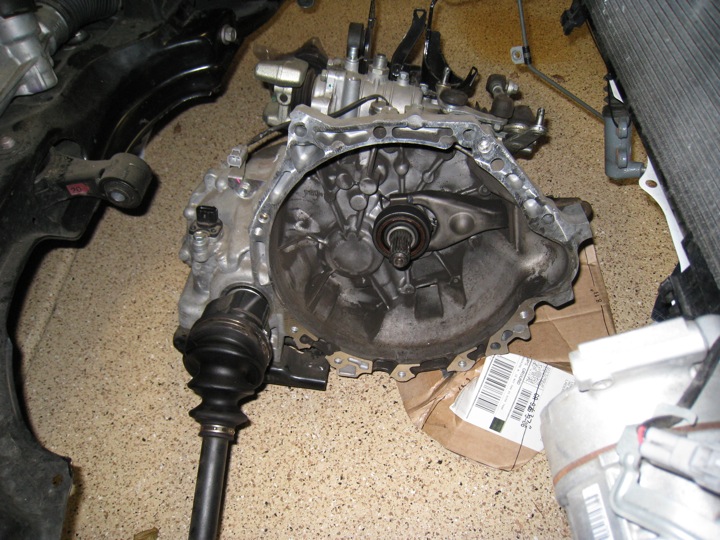
Despite hitting a snag with the drive shafts, I proceeded with a plan to drop the transmission out of the engine bay (gently resting it on the floor) while using the hoist to lift the engine up and out.

I started by installing the factory engine hooks to the proper locations and rigging up the engine hoist and leveler. With the chains taught, I removed the load of the engine from the mounts and proceeded to unbolt the transmission and all of the motor mounts. A bit of wrestling to get the flywheel and clutch clear of the transmission bell housing and I had it free. However, at this point the 'engine control rod' as it's called in the repair manual had escaped me and was preventing the transmission from dropping out. Once I unfastened that, I won.
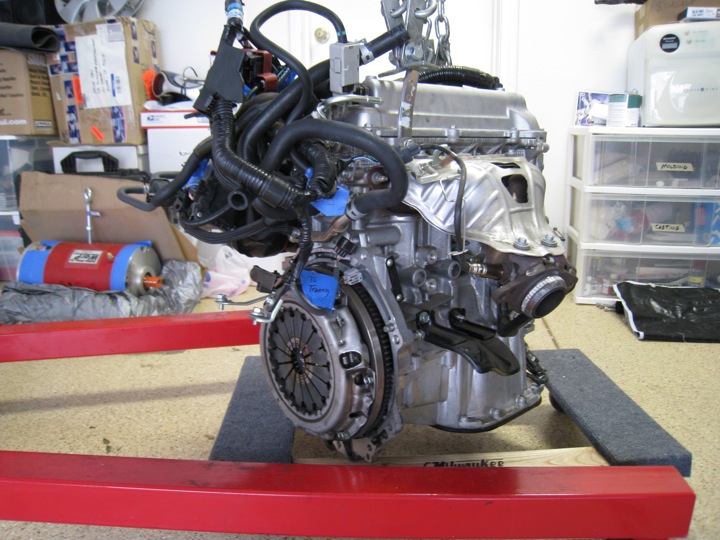
Here's a closer look at the Yaris engine lowered onto a furniture dolly. I read that this thing only weighs 180 lbs.
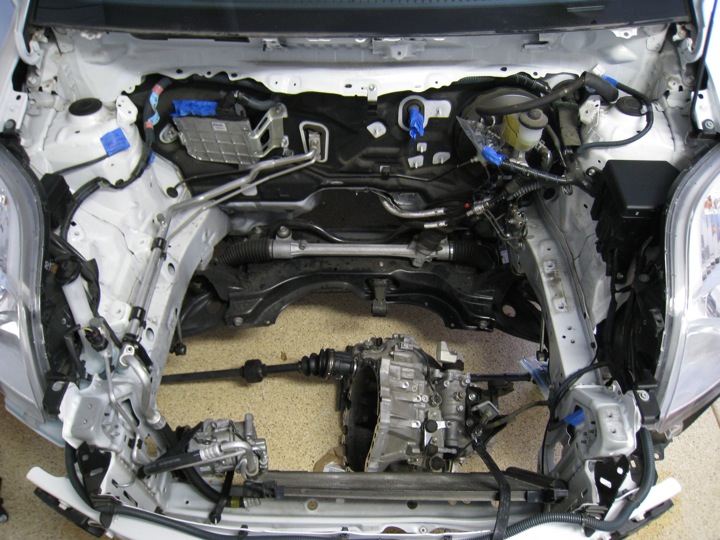
Still in need of a cleaning (but hardly dirty), the engine bay looks great. The transmission looks a little small in this photo because it's sitting on the floor about a foot from where it should be. 
Below is a close up of the clutch assembly. Note that there is no pilot bearing to connect the flywheel hub to the the splined shaft coming from the transmission.
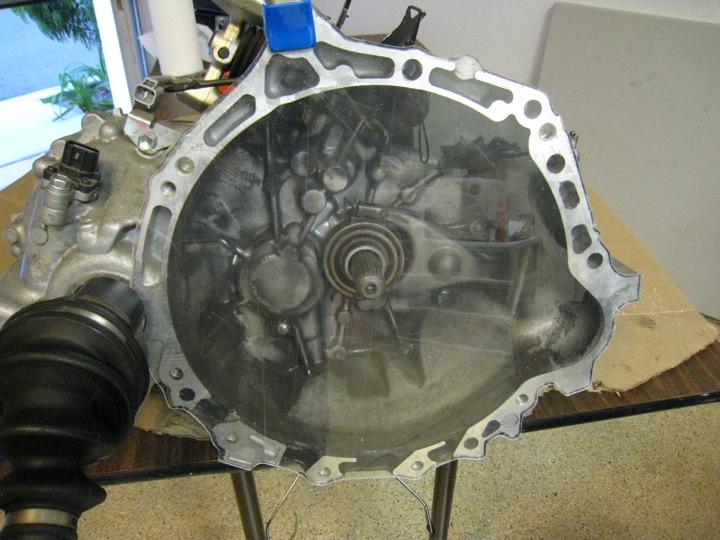
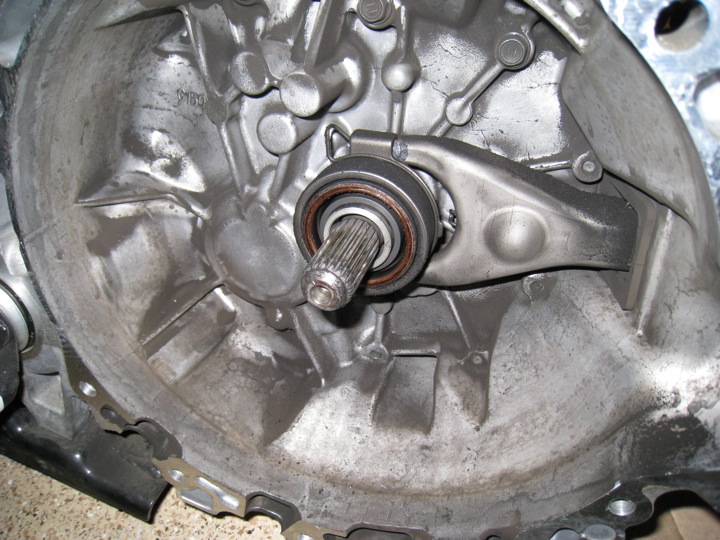
With the engine and transmission separated, I can finally get a good look at the splined input shaft, throw out bearing, clutch fork, and of course... the bell housing flange .
Next up, it's time to start planning and measuring. The design of the adapter plate to mount the Warp 9 electric motor to this transmission is critical. All the part have to line up just right to ensure proper operation as well as safety and reliability.
Thursday, March 5, 2009

The Zilla controller arrives!

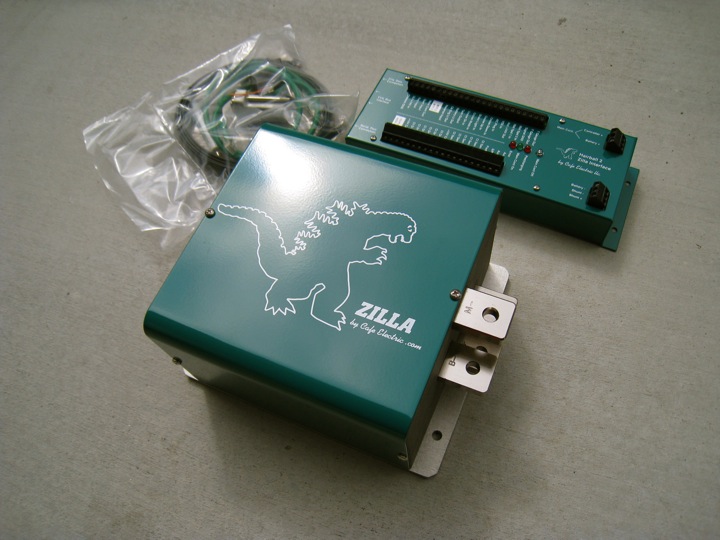
Ordered in August, and received today, my new Cafe Electric Zilla 1K HV controller has finally arrived. This is probably the most important component of my EV conversion. In a nutshell, the controller regulates the flow of electricity from the battery pack to the motor. This particular controller is in short supply (for the time being) and the company that produces them is looking for a partner to continue manufacturing them. For this reason, I placed my order the day I found my donor car in anticipation of the long wait. Here's what I received:
The controller itself is located bottom/center in the photo. It is quite heavy for such a small box. Above it (to the right) is the "Hairball" interface. This little piece of hardware allows for many options when configuring the electric drive system. One important feature I chose for my Zilla is the Hall Effect Pedal Input (-P option) that will allow me to connect the stock Yaris pedal to the Hairball without the need to rig up a potentiometer to regulate speed. Finally, a small bag includes some cables, a small tool, and other misc. bits. I'm very excited to have these parts in hand.